
thick hair · haircuts
Best Haircuts for Thick Hairin 2027
The best haircuts for thick hair in 2027, including layered lobs, textured shags, and short cuts with undercuts, plus how to remove bulk without frizz.
Hairover Team
The best haircuts for thick hair in 2027 are layered lobs, long shags, butterfly layers, and shorter shapes with weight taken out from inside. The goal is to remove bulk while leaving enough hair to keep a good outline. Ask for internal layers, point cutting, or a hidden undercut. A one-length cut with no internal shaping is usually the one that feels heaviest and hardest to manage.
How thick hair differs
“Thick” can mean a high number of hairs, wide individual strands, or both. Our hair density test can help you work out which applies to you. The distinction matters: dense but fine hair can still feel soft and collapse at the ends, while dense and coarse hair can hold shape strongly but expand at the sides. Tell your stylist which it feels like.
Long and medium cuts
Layered lob
Hitting around the collarbone, this length removes a lot of weight while leaving something to tie back. Internal layers stop it from turning into a triangle. See our layered lob guide.
Long shag
Thick hair can carry a shag better than almost any other hair type, because there’s enough hair to keep the bottom full even with layers throughout. See shag haircut ideas for 2027.
Butterfly layers
Thick hair holds this layered shape well. The shorter top layers add bounce and let the bottom stay long, and it doesn’t lose volume at the ends. See our butterfly haircut guide.
Long layers with face framing
If you want to keep length, soft layers from the collarbone down lighten the feel without a big change. Our layered haircuts for 2027 and long hairstyles for 2027 cover the options.
Wolf cut
This one benefits from thick hair, as the chopped-in crown layers need hair to show up well. It’s bold, though, so read our wolf cut guide first.
Short cuts
Graduated or stacked bob
Graduation at the back removes weight from the nape and gives you a clean shape. A long, one-length bob is harder to wear on very thick hair because it can expand outward.
Bob with a hidden undercut
A small section is clippered at the nape or above the ears, then covered by the hair above. No one sees it, but it takes away a lot of bulk. It’s also cool in hot weather.
Textured pixie
A pixie with weight removed from around the ears sits closer to the head and is much easier to style than one left too full. See our pixie cut ideas and our guide to short crop hairstyles.
Thick hair for men
Thick hair gives men more options than most, including styles with height that thinner hair can’t hold:
- Textured quiff or pompadour. Density gives natural lift. See our quiff guide for 2027.
- Two block. A heavy top hides the short underneath, which suits thick, straight hair. See our two block guide.
- Taper with a full top. It keeps side bulk under control. See taper fades.
For curls, read haircuts for thick, curly hair (men).
How to remove bulk without creating frizz
Weight removal is where thick hair haircuts most often go wrong. A few guidelines:
- Point cutting removes weight from the ends in a softer way than a blunt scissor.
- Internal layers hide inside the shape and don’t create a visible step.
- Thinning shears can be useful, but overusing them can leave short pieces that stick up as they grow, particularly near the root. Ask your stylist where they intend to use them.
- Razor cutting can look great on some hair but may fray coarser or frizz-prone textures.
If you already have frizz, see how to fix frizzy hair.
Faster drying
Thick hair takes time to dry, which is the main complaint most people have. A few things help:
- Blot your hair with a towel, then leave it wrapped for several minutes.
- Rough-dry to around 80 percent, with no brush.
- Dry in sections, working from the nape up.
- Finish only your front sections with a brush. The rest usually doesn’t show.
Use low or medium heat and a product to protect your hair, as the American Academy of Dermatology recommends. Our how to blow-dry guide has more.
Products
Lighter is not always better. Thick hair tends to take a creamy product well, particularly at the ends. Use a smoothing cream on damp hair if you want to reduce volume, or a light mousse if your hair is thick but soft and you want to keep it lifted. Oil can help when applied to the ends only, and a little goes a long way.
What to ask at the salon
Try: “My hair is thick and heavy. Can you take weight out from the inside with point cutting, and keep the outline full?” Ask how the cut will behave at day five, not just on the day you leave the salon. And if you tie your hair back regularly, mention it. Heavy ponytails can pull, and the AAD warns that continually pulling hair tightly back can lead to permanent hair loss, so a lighter cut may help.
See it with your density
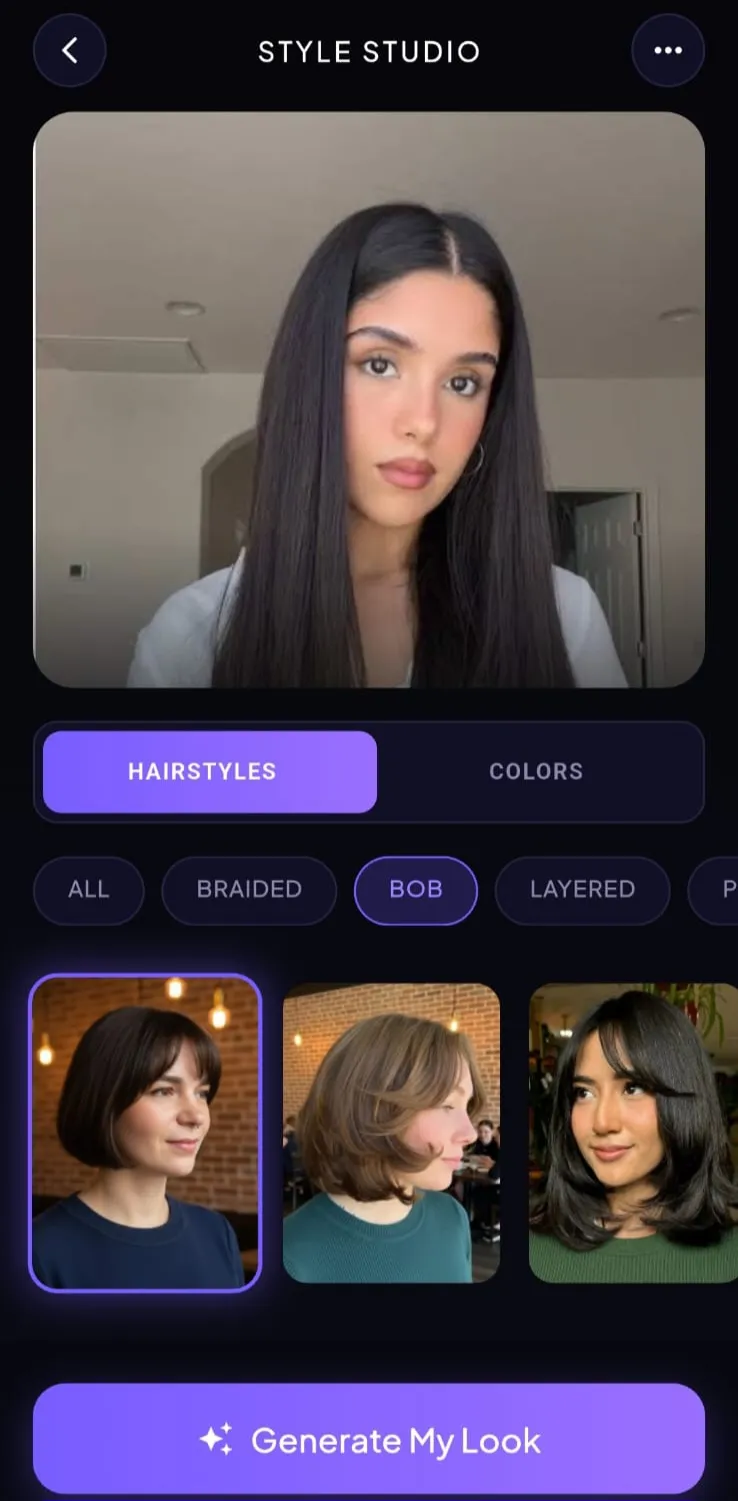
Thick hair changes how a cut looks. Hairover’s analysis notes your density and texture, and Style Studio lets you try a shorter shape or a shag on your own face before you book.
FAQ
What haircut is best for thick hair?
A cut with internal layers, such as a layered lob or a long shag, usually gives the best balance. It removes weight while leaving a full-looking shape.
Should I have thick hair thinned out?
Some weight removal helps, but over-thinning can create frizz and short pieces that stick out. Ask for internal layers or point-cutting instead of aggressive thinning shears.
Can thick hair have a short cut?
Yes, with weight removed from inside the shape. A hidden undercut at the nape is another good way to make short, thick hair easier to manage.
How do I reduce the time it takes to dry thick hair?
Try rough-drying to around 80 percent first, then use a brush only for the last stage. Removing bulk through a cut also shortens drying time.