medium · women
Layered Lob
A long bob with layers for movement. Often worth exploring if you want a clearer outline than long hair, without going fully short.
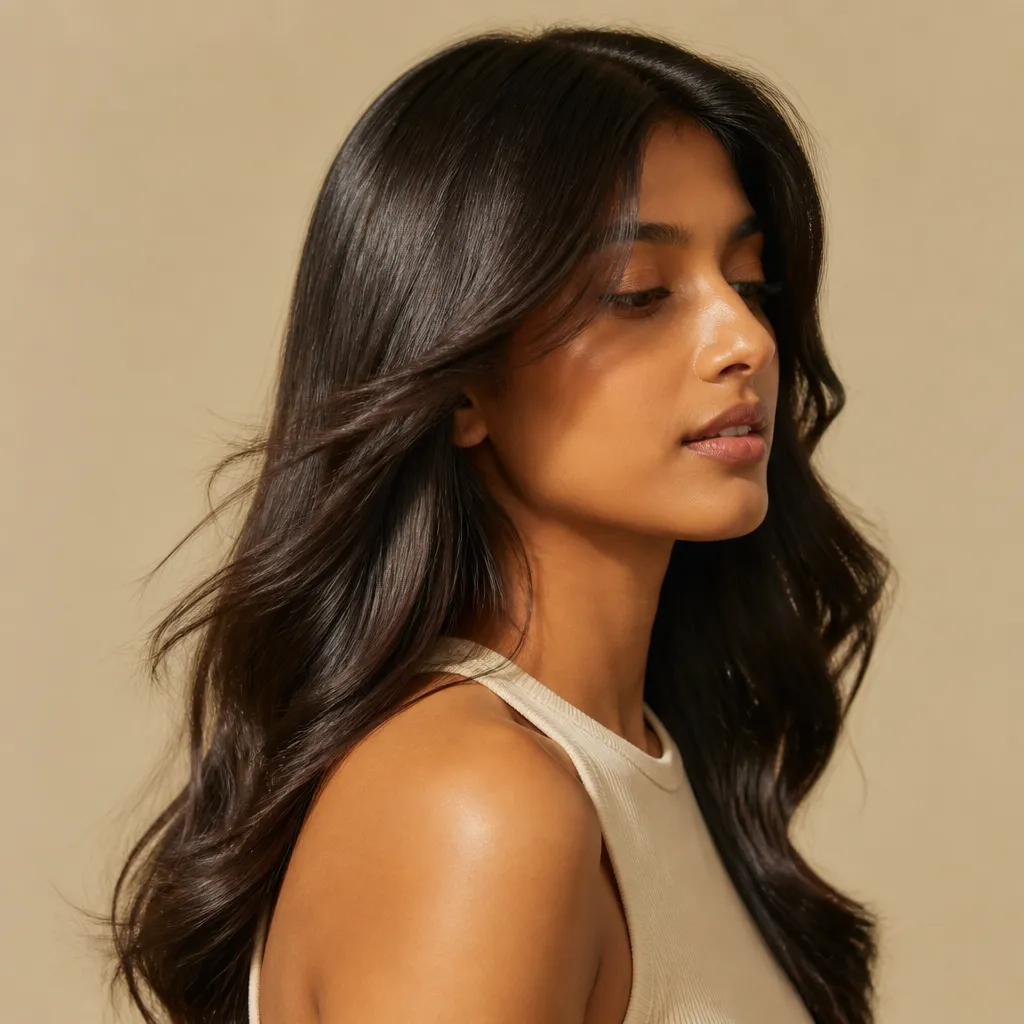
A layered lob (long bob) cuts hair to a mid length and removes some weight so the ends can move. It is commonly recommended when long hair feels heavy or triangle-shaped, and a pixie feels like too large a jump.
On round faces, a lob that sits below the chin is often worth exploring because the extra length can create a longer line. On square faces, layers that break a blunt horizontal can soften the jaw. Heart-shaped faces often pair a lob with curtain bangs so the forehead and chin feel more balanced.
The layering pattern should match density. Thick hair usually needs more interior weight removed; fine hair can look thinner if it is over-layered. Take a photo of the length you want when hair is dry, especially if your hair shrinks.
Choosing where a lob sits
The exact length changes how the cut behaves more than most people expect. A lob that sits right at the chin creates the sharpest, most graphic line and tends to draw the eye to the jaw. That’s useful if you want a defined shape, less useful if you are self-conscious about that area. Moving the length down to the collarbone softens the effect and starts to behave more like long hair, just with a cleaner, less stringy end. If you are unsure, it is easier for a stylist to take more off at a follow-up visit than to add length back.
Styling a layered lob
Blow-drying with a round brush, flipping the ends out or under at the last pass, is the most common way to style a lob and takes less time than it would on longer hair since there is less length to work through. If you would rather air-dry, a lightweight mousse or texturizing spray applied to damp hair helps the layers separate instead of clumping together as they dry. A lob also takes a simple wave well. Because the ends carry less weight than on long hair, curls tend to hold their shape longer between touch-ups.
Upkeep and grow-out
A trim every six to eight weeks keeps the shortest layers doing their job. Once they grow past a certain point, the lob starts to look like one heavy length again rather than a layered shape. Growing a lob out into longer hair is straightforward since the layers already exist, so a stylist can blend new length in as it grows rather than starting the shape over.
Related styles to compare
Curtain bangs are a common pairing with a lob if you want more framing around the face, and soft waves work well as a styling option once the layers are in.
Related hairstyles
Curtain Bangs
A center-parted fringe that opens around the face. Often used to soften a forehead or add a frame without committing to a full blunt bang.
Pixie Cut
A short, shaped cut that relies on the outline around the face. Often worth exploring if you like a defined silhouette and quicker mornings.
Soft Waves
A relaxed wave pattern that adds movement to medium or long hair. Often used to soften angles without a dramatic cut.
Face shapes often discussed
Related guides
From the journal
FAQ
Where should a lob sit?
Most lobs land somewhere from the chin to a few inches below it. Chin-length reads sharper. Collarbone length feels closer to long hair with a cleaner end. The better choice depends on your neck, jaw, and how you like to tuck hair.
Is a lob easier than long hair?
It can be quicker to dry and often looks more "done" with less styling. It still needs trims to keep the ends from looking heavy. If you regularly wear a high bun, losing that length is a practical trade-off to consider.
How do I style a layered lob at home?
A round brush and blow-dryer for outward flip at the ends is the most common approach, but a lob also holds a simple wave from a curling iron or flat iron well since there is less weight pulling the curl out. On air-dry days, a light sea-salt or texturizing spray keeps the layers from falling flat.
How often does a layered lob need a trim?
Every six to eight weeks keeps the layers from growing into a single blunt shape and softening the outline the cut relies on. Waiting much longer usually means the shortest layers catch up to the rest before your next visit.
Will a layered lob work with thick or curly hair?
Yes, and it often helps. Removing weight through layers keeps thick or curly hair from sitting like a triangle at collarbone length. Ask your stylist to check the shape once hair is dry, since curl pattern shortens and reshapes the layers compared to how they look wet.


Google Play & App Store
Ready to find your next hairstyle?
Upload a photo in Hairover and try men’s and women’s haircuts on your own face (crops, fades, bobs, layers, and more), then take a still to the chair.