
quiff · mens hair
Quiff Haircut Ideasfor 2027
Quiff haircut ideas for 2027, from the textured quiff and short quiff to curly and fade versions, with who each suits, how to blow-dry it, and what to ask for.
Hairover Team
The most wearable quiff haircuts for 2027 are the textured quiff, the short quiff, the fade quiff, the curly quiff, and the side-swept quiff. A quiff lifts the front hair up and back from the forehead, and it’s less sculpted than a pompadour. Modern versions look more natural, with a matte finish and some visible texture. It needs about two to four inches at the front, and a quick blow-dry is the difference between lift and a flat fringe.
If you’re torn between this and something taller or lower-effort, see pompadour vs. quiff and textured crop vs. quiff.
Textured quiff
The modern default. Choppy top layers and a matte finish look relaxed, not stiff. It works with most hair types, and small imperfections look deliberate.
Ask for: “a textured quiff, around three inches at the front, point-cut on top, and a low taper on the sides.”
Short quiff
Shorter and easier, with a low lift. It’s a good choice if you’re trying a quiff for the first time, or for a more conservative office. See business haircuts for men in 2027.
Fade quiff
A skin or mid fade gives contrast against the top and makes it look taller. It needs touch-ups every few weeks, but the sharpness can be worth it. See fade haircuts for 2027 and low vs. mid vs. high fades.
Curly quiff
Curls give a quiff natural volume, so you can skip the blow-dry on many days. Keep your sides tapered and leave enough length for the curl to form on top. See curly taper haircuts.
Wavy quiff
Waves give natural lift and hide imperfections. It’s easier than most styles, with a little cream and some finger-styling. See wavy hairstyles for men in 2027.
Side-swept quiff
Here the front sweeps a bit to one side as well as upward. It softens a strong forehead and can work well with an uneven hairline or cowlick. See our cowlick guide.
Classic quiff
Taller, with more shine and a cleaner finish. It works for formal events and vintage looks, but it needs more product and time than other versions. Keep it for thick hair and special occasions.
How to style a quiff
- Start with damp hair. Add a little pre-styler or sea salt spray if your hair is soft.
- Blow-dry upward. Direct the air at the root, lifting the front with your fingers or a round brush. This is what creates the height.
- Set the shape. Use the cool setting if your dryer has one.
- Add product. Rub a small amount of matte clay or paste between your palms, then work it from back to front.
- Finish with fingers. Push the front up and back, and leave some texture.
The American Academy of Dermatology recommends using low or medium heat and a product to protect your hair. Our guide to pomade vs. clay vs. wax explains how to choose a product.
Who a quiff suits
Round faces. Height on top makes your face look longer, so a quiff is a good choice. Keep the sides short.
Square faces. Works well, and a softer texture balances a strong jaw.
Oval faces. Most versions look good.
Oblong faces. Keep the height low, as a tall quiff makes a long face look longer. See short haircuts for an oblong face.
Heart faces. Don’t go too tall. Keep your sides fuller. See men’s hairstyles for a heart-shaped face.
Thinning hair and receding hairlines
A quiff can show recession and scalp, since it pushes hair away from the forehead. If your hairline is well back, a short crop or other forward style usually works better. If you only have slight recession, a short textured quiff with a matte finish can still look good. See best haircuts for a receding hairline.
Common quiff mistakes
- Too much product. It weighs down the lift. Start with less than you think.
- Skipping the dryer. Product alone won’t give you lasting height.
- Sides too long. Full sides make the top look less dramatic and your head look wider.
- Front too short. Hair needs enough length to lift. If it stands straight up, it looks spiky rather than like a quiff.
- Styling forward. Hair trained to fall forward can be hard to push back at first. Give it a few days.
Maintenance
Plan on a trim about every three to five weeks, or more often with a fade. Between cuts, you can usually get by with a neck tidy. See how often to get a haircut. If your top starts to feel heavy, ask your barber to remove bulk rather than length.
What to tell your barber
Say how much height you actually want and how much time you’ll spend on it. A barber can cut a quiff that needs a blow-dry or one that’s more forgiving. Bring a photo from the side, because the profile is what makes a quiff. Try: “I want this much height, I’ll spend two minutes on it, and I use matte product.” You’ll find more tips in what to tell your barber.
Related guides
See it from your front view
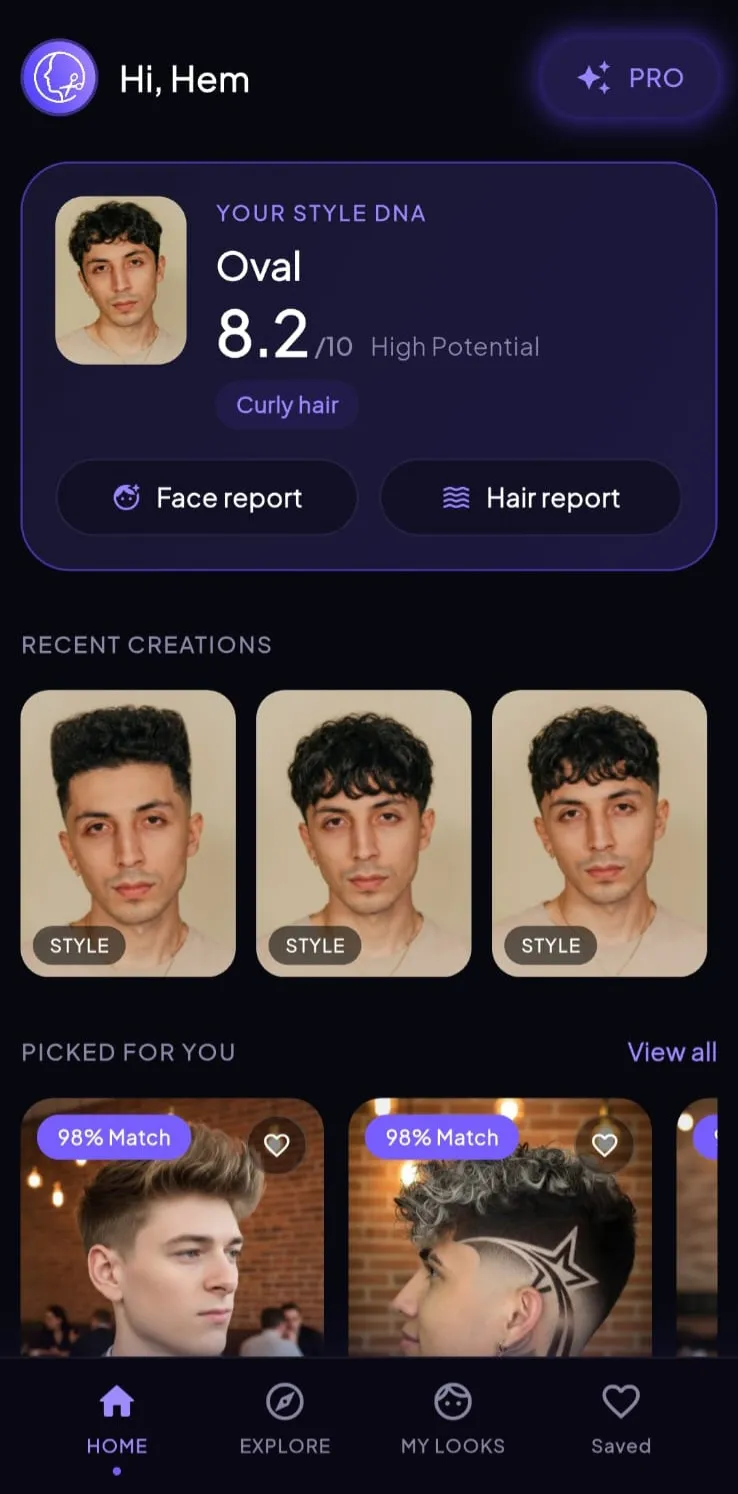
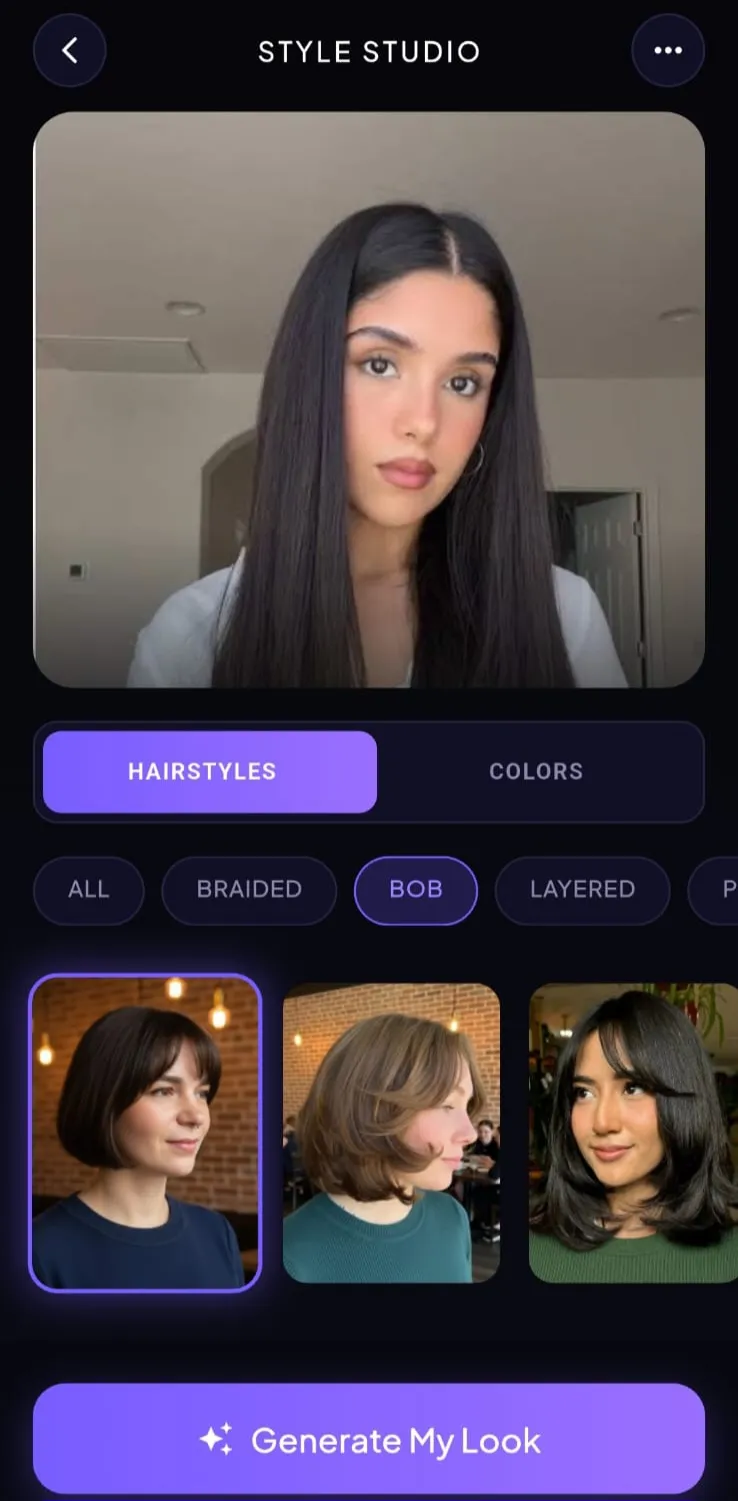
Height changes the proportions of your face, so try before you commit. Upload a clear photo to Hairover, and try a quiff on your own face in Style Studio, then compare it to a lower-effort crop.
FAQ
What is a quiff?
A men's hairstyle in which the front hair is lifted up and back from the forehead. It sits lower and looks less sculpted than a pompadour.
How long does hair need to be for a quiff?
About two to four inches at the front is usually enough. The sides can be anything from a short fade to a longer taper.
Is a quiff good for thin hair?
A short, textured quiff can work. A tall one is harder because it can show your scalp. Blow-dry at the root and use matte products.
What product is best for a quiff?
Matte clay or paste gives a modern, textured finish. A pomade gives more shine and a more classic look. Use a little and build up.