
butterfly haircut · layers
Butterfly Haircut for 2027: What It Is and WhoIt Suits
The butterfly haircut explained, including how the two-tier layers work, who it suits by hair type and face shape, styling steps, and how to ask for it.
Hairover Team
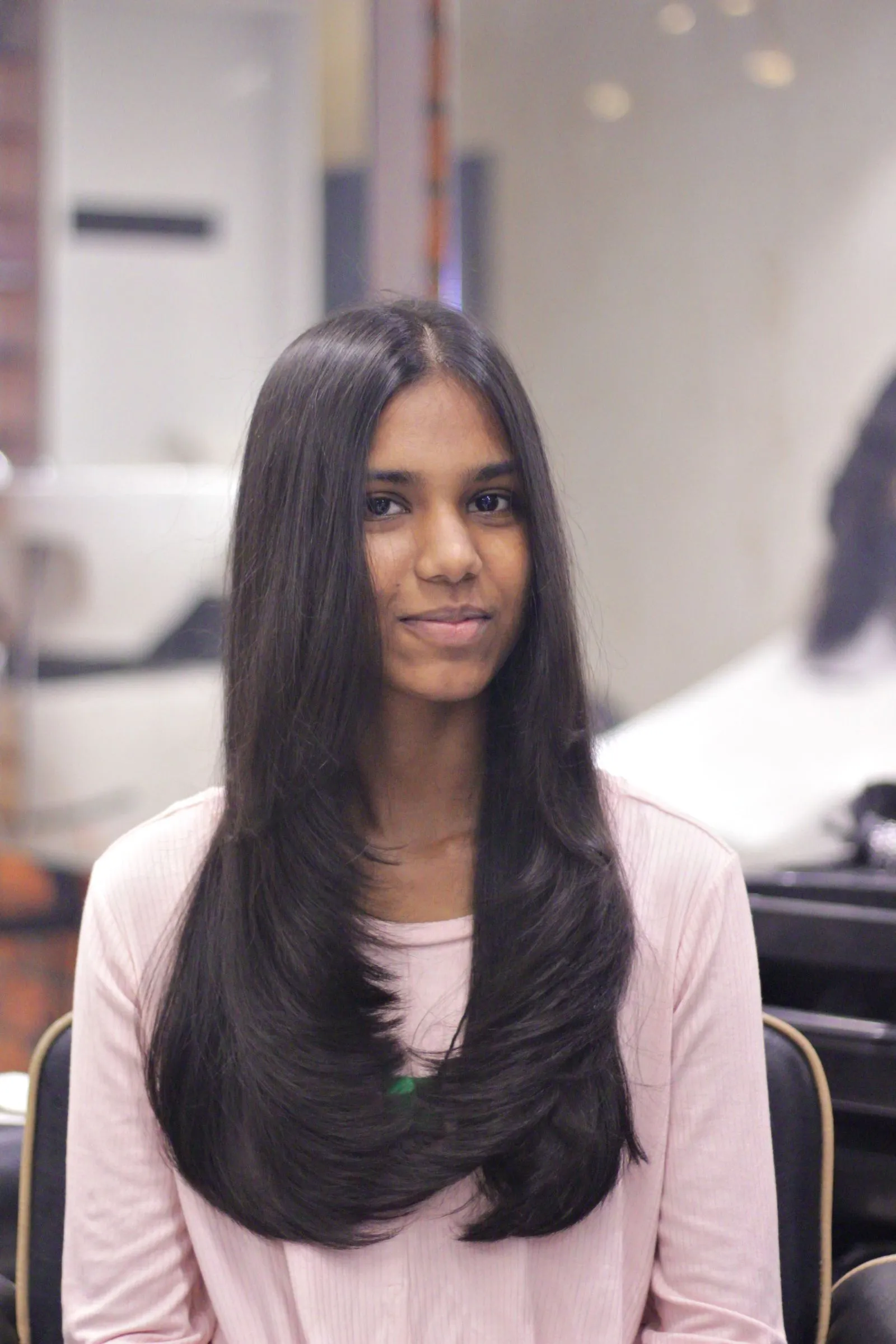
A butterfly haircut uses two tiers of layers. The short top tier sits around the face and crown and gives volume, and the long lower tier keeps your length. Styled with a round brush, the top pieces flip outward like wings, which is where the name comes from. It gives you the look of a shorter cut from the front and long hair from the back, without actually taking off much length. It remains a popular way to add volume going into 2027 without losing length.
That makes it a good option if you want a real change but do not want to lose your length.
How the cut works
A stylist usually sections off the top of the head and cuts that section shorter, often somewhere between the chin and the collarbone. The hair underneath stays long, with its own light layering. The two sections are then blended enough that they move together, but the step between them stays visible.
This is the main difference from layered haircuts for long hair. Standard layers gradually shorten as they go up, so the effect is subtle movement. A butterfly cut is deliberately less subtle. If you tie your hair back, you will likely see the short top pieces fall out around your face.
Who the butterfly cut suits
Medium and thick hair is the natural fit. There is enough density to fill both tiers, and removing weight from the top makes heavy hair easier to manage.
Wavy hair also works well, because waves add movement to both tiers. You can often skip the round brush and diffuse instead.
Fine hair can wear it, with adjustments. The risk is that the long tier looks thin once so much hair has been moved up top. Ask your stylist to keep the lower section fuller, and consider a shorter overall length. Our guide to hairstyles for thin hair has other options that build fullness.
Curly hair can work, but the shape changes. Curls shrink at different rates, so a stylist needs to cut it dry and leave extra length. On tight curls, a rounded layered shape usually gives a better result than a butterfly.
Very straight hair will show every line, and the wing effect depends entirely on styling. If you do not want to blow-dry, this is probably not your cut.
Butterfly cuts and face shape
The placement of the top tier matters more than the cut’s name. Where the shortest piece lands is where the eye goes.
- Round: let the shortest pieces fall below the chin and sweep away from the face, so they do not add width at the cheeks.
- Square: soft, curved pieces at the cheekbone and jaw round off angles. Avoid a blunt shape at jaw level.
- Heart: start the short tier near the chin to add fullness in the narrower lower part of the face.
- Oblong: keep the volume at the sides, and do not add much height at the crown. A soft fringe helps too.
- Diamond: curtain-style pieces at the forehead add width where the face is narrowest.
- Oval: most placements work, so choose based on the length you prefer.
Our face shape guides explain each outline in more detail. Treat these as a starting point, since your hair texture will often matter more.
Butterfly cut variations
Long butterfly. Short pieces start around the collarbone. It is soft and easy to wear, and a good first try.
Bold butterfly. Short pieces start around the chin or cheekbone. The contrast is much stronger, and it gives more volume, but it needs more styling.
Butterfly with curtain bangs. The most common pairing, since curtain bangs flow into the top tier. Our curtain bangs guide explains how to pick a length.
Butterfly with a soft fringe. A wispy fringe in front of the wings. It suits longer faces, though it adds another section to style.
How to ask for a butterfly cut
The word alone does not guarantee a result, since stylists interpret it differently. Bring photos and use specific language:
“I’d like a butterfly cut. Please keep my length, but cut a shorter top section starting at my collarbone, with face-framing pieces. I want a visible difference between the two tiers, but please blend it so that it still moves together.”
Then tell them how you actually wear your hair. If you never use a round brush, say so. A good stylist can move the layers so the cut still works when it air-dries.
How to style a butterfly cut at home
The photos you see online are almost always blow-dried. Here is how to get close:
- Apply heat protectant and a light volumizing product to damp hair.
- Rough-dry until your hair is around 80 percent dry.
- Using a large round brush, dry the top section first, rolling the ends away from your face.
- Dry the lower section with a slight bend at the ends.
- Shake it out with your fingers once it cools down, then add a very small amount of light oil to the ends.
Hot rollers or large velcro rollers on the top section can do most of this with less effort. For an air-dried version, twist the front pieces away from your face while damp and leave them to dry.
Maintenance and growing it out
A butterfly cut holds its shape for around eight to twelve weeks. As the top layers grow, the cut softens into a regular long layered style, so growing it out is fairly painless. That is one of its advantages over a wolf cut, which starts much shorter at the crown.
The one real commitment is the top tier. Once it is cut, those shorter pieces will stay out of a ponytail for several months. If you tie your hair back every day for work or sport, bring this up before the first snip.
Related guides
See the two tiers on your own photo
Where the short layers land changes the whole effect, and that is hard to judge from someone else’s photo. Hairover lets you upload a clear photo, get a hair analysis, and try hairstyles on your own face in Style Studio. Compare a long butterfly with a bolder one, then take the version you like to your stylist.
FAQ
What is a butterfly haircut?
A butterfly haircut has two distinct tiers of layers. Shorter layers around the face and crown create volume, while longer layers underneath keep the overall length. The name comes from the way the shorter top layers flare out like wings.
Is a butterfly cut good for thin hair?
It can add the look of fullness to thin hair, since short top layers create lift. But too many layers can make the ends sparse, so ask for fewer layers and a fuller perimeter.
What is the difference between a butterfly cut and a layered cut?
Regular layers usually blend gradually from short to long. A butterfly cut has a more noticeable step between the shorter top section and the longer lengths, which gives it more volume and a more styled shape.
Can you get a butterfly cut on short hair?
It works best at shoulder length or longer, because the shape relies on contrast between two lengths. On hair shorter than the shoulders there is not much room for that contrast, so it starts to look like a short shag.