
hair type · hair care
How to Test Your Hair Densityat Home
How to find your hair density with simple at-home tests, how it differs from hair thickness, and which cuts and products suit low, medium, and high density hair.
Hairover Team
Hair density means how many strands grow on your head. To test yours, pull your dry hair to one side and look at your scalp. If it’s easy to see, you likely have low density. If you can’t see much even when parting it, you likely have high density. Density affects cut choice more than most people realize.
Density vs. thickness
These two get mixed up all the time.
- Density is the number of strands. It is about how many hairs you have.
- Thickness is how wide each strand is. It is about how coarse your hair feels.
You can have many fine strands that look full but won’t hold a curl, or fewer coarse strands that feel strong but show the scalp. Your cut should take both into account.
Three at-home tests
1. The scalp test. With your hair dry and down, look at the top of your head in a mirror in good light.
- Scalp is easy to see: low density.
- You see some scalp when hair moves: medium density.
- Scalp is hard to see, even when you part your hair: high density.
2. The ponytail test. Tie your hair back, and measure the thickness of the ponytail with a tape measure.
- Under about 2 inches around: low.
- About 2 to 3 inches: medium.
- Over about 3 to 4 inches: high.
These numbers are rough rules, and they won’t work for short hair, so use them as a guide only.
3. The handful test. Grab your hair at the nape in one hand. Compare how it feels to a friend’s hair. It’s not precise, but it can be useful when you’re not sure.
Do these tests on clean, dry hair, and don’t rely on just one. Curly hair can look denser than it is, so check the scalp at the part.
Best cuts by density
Low density
Keep the ends thick. Blunt bobs, soft lobs, and short textured crops work well. Be careful with heavy layers, razor cuts, and long hair with see-through ends. Our guides to hairstyles for thin hair and haircuts for thinning hair in men cover this in detail.
Medium density
You have the widest choice. Layers, shags, and fringes all work, so let your texture and lifestyle decide.
High density
Your hair needs its weight managed. Internal layers, shags, wolf cuts, and undercuts remove bulk. Avoid blunt one-length cuts near the shoulders, which can look like a triangle.
Product tips
- Low density: light mousses and sprays. Heavy creams weigh strands down and reveal your scalp.
- Medium density: most products work, but start small.
- High density: you may need more product, and creams or oils can help keep hair smooth.
When density changes
Density can drop over time because of genetics, aging, hormones, illness, or stress. If you are shedding suddenly, or your part is getting wider, it is worth seeing a doctor. Our guide to how fast hair grows has a list of warning signs.
Make density work for you
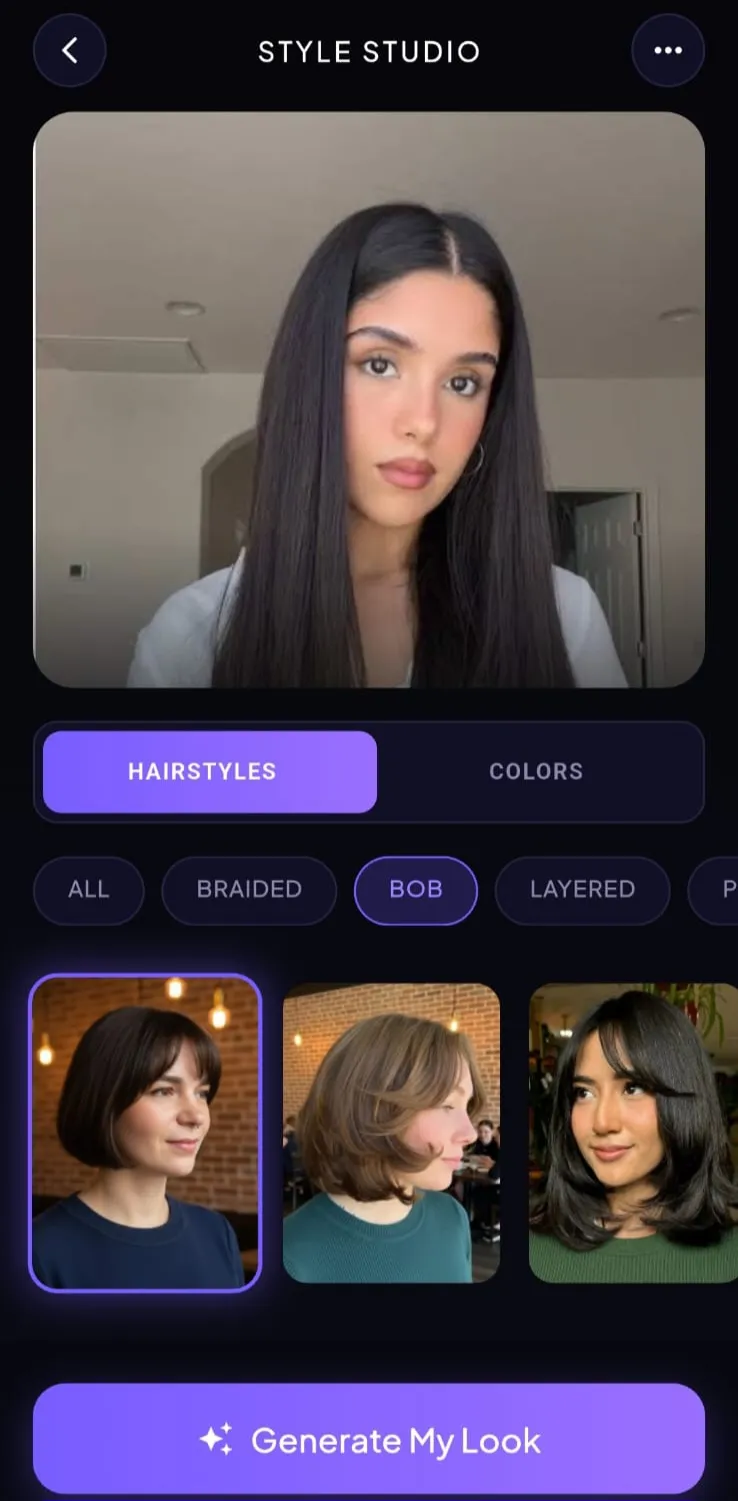
Hairover’s analysis looks at texture, length, and density from your photo. Upload a clear one, then try hairstyles on your own face in Style Studio to see which shapes make the most of the hair you have.
FAQ
What is the difference between hair density and thickness?
Density is how many strands you have on your head. Thickness is how wide each individual strand is. You can have dense fine hair, or low-density coarse hair.
Can you increase hair density?
Cuts and products can make hair look fuller, but they don't add strands. If your density has dropped noticeably, it is worth asking a doctor or dermatologist about it.
What is the best haircut for low density hair?
Shorter lengths and blunt ends usually look fullest, because they keep the ends dense. Too many layers can make low-density hair look thin.