
haircuts · guides
How to Choose a Haircut BeforeYou Cut
How to choose a haircut you will actually like, by checking hair type, face shape, lifestyle, and upkeep, then testing it on your own photo first.
Hairover Team
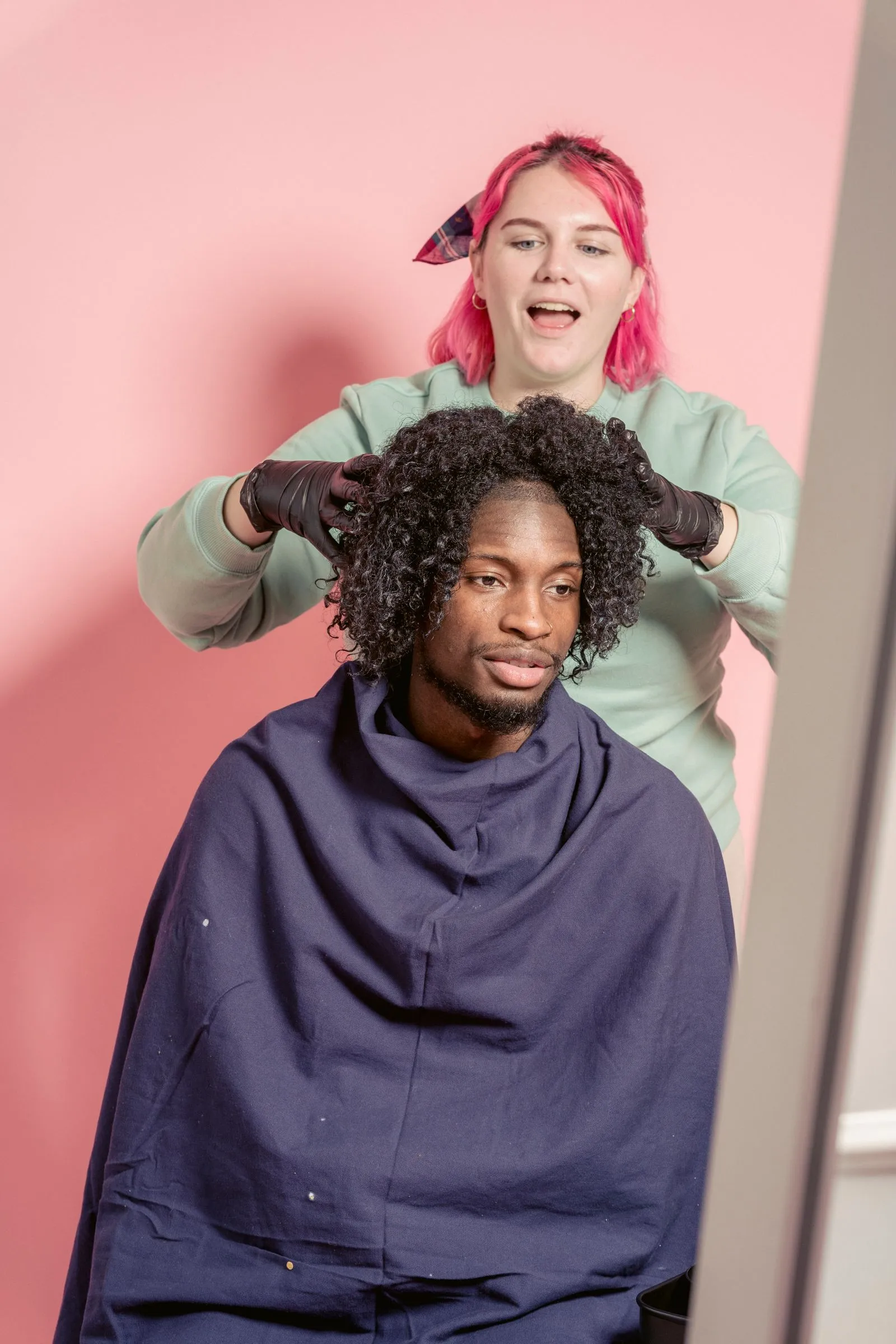
The simplest answer to how to choose a haircut is to check five things in order: your hair type and density, your face shape, your daily routine, how often you can get a trim, and how the cut looks on your own face. Most haircut regret happens when someone picks a cut from a photo of a person with completely different hair. If you start from your own hair and test the idea before you book, you are far more likely to love the result.
This guide walks through each step, with practical questions to ask yourself and your stylist, plus a short checklist to use before your next appointment.
Step 1: Understand your hair type and density
Your hair decides how a cut actually behaves, so start here.
Texture. Is your hair straight, wavy, curly, or coily? Straight hair shows every line of a cut, so blunt bobs and sharp fades look crisp. Wavy hair adds movement and suits shags and layers. Curly and coily hair shrinks as it dries and needs a cut shaped around the curl pattern, often done dry.
Strand thickness. Fine hair has narrow strands and can look flat. Coarse hair has thick strands and holds shape well, but can puff out.
Density. How much hair do you have? Thin hair usually looks fuller with blunt ends and shorter lengths. Thick hair often needs weight removed with layers, or it can look boxy or triangular.
Growth patterns. Cowlicks, a strong crown whorl, or a receding hairline affect where a cut can sit. A fringe on top of a front cowlick, for example, will need daily styling.
If you are not sure, ask your stylist to describe your hair before you choose. Our hairstyles for thin hair and curly hairstyles for 2027 guides go into more detail for those hair types.
Step 2: Consider your face shape, as a starting point
Face shape helps with proportion. Round faces often suit added height or length. Square faces suit either soft layers or a deliberately sharp cut. Oblong faces suit width at the sides or a fringe. Heart faces suit fullness around the jaw. Oval faces wear most cuts.
But face shape is a guide, not a rule. Many people do not fit one shape neatly, and a cut that breaks the usual advice can still look great. Our article on why face shape is a starting point explains why. To find your shape, try the free face shape detector, then read the matching face shape guide.
Step 3: Be honest about your routine
A cut that looks great in a salon photo needs to work on a normal Tuesday. Ask yourself:
- How long do you spend on your hair each morning? If the answer is two minutes, avoid cuts that need a round-brush blow-dry.
- Do you air-dry or blow-dry? Some cuts only look right after a blow-out.
- Do you use product? Textured crops and quiffs need paste. A blunt lob does not.
- Do you tie your hair back often? For work, sport, or hygiene, you may need enough length for a ponytail.
- Do you wear glasses, hats, or helmets? These affect fringe length and how a cut sits at the sides.
Our easy office hairstyles guide covers cuts that hold up to a busy routine.
Step 4: Factor in upkeep and budget
Every cut has a maintenance schedule. Skin fades and sharp pixies usually need a trim every two to four weeks. Bobs need one every six to eight weeks. Long layered hair can go eight to twelve weeks. Bangs need a quick trim every three to five weeks.
Think about how often you can realistically get to a salon or barber, and what that costs. A cut that grows out gracefully, such as a blunt lob, long layers, or a low taper, is a better choice if you can only get a trim every couple of months.
Step 5: Gather the right reference photos
Look for reference photos of people with hair similar to yours in texture and density, not just people whose overall look you like. A sleek bob on very thick, straight hair will not look the same on fine, wavy hair.
Collect photos from the front, side, and back. Note what you like in each: the length, the fringe, the layers, or the overall shape. Also save one or two photos of cuts you definitely do not want. Stylists find those just as useful.
Step 6: Preview the haircut on your own face
The most reliable way to judge a cut is to see it on your face. A preview on a clear, front-facing photo shows how length, fringe, and volume sit against your own features, which a reference photo cannot.
Take a well-lit photo, looking straight at the camera, with your hair off your face if possible. Our guide on how to take a photo for hairstyle recommendations has a full checklist. Then compare two or three options side by side. Include one that follows the usual advice for your face shape and one that does not.
Step 7: Talk to your stylist
Bring your shortlist and your reference photos, and explain:
- What you like about each photo.
- How you style your hair and how much time you spend.
- Any growth patterns, cowlicks, or areas of thinning.
- How often you can come back for trims.
- What you want to avoid.
Then ask your stylist for their honest opinion. A good stylist will tell you if a cut will not work with your hair, and suggest an adjustment that gets you close.
Before they start cutting, ask them to show you with their fingers or comb where the ends and the shortest layer will fall. That one check catches most misunderstandings about length, which is the most common reason people walk out unhappy. If you are changing a lot, ask what the cut will look like in six weeks, too.
How to avoid haircut regret
- Make big changes in steps. Go from long to a lob first, then to a bob.
- Ask for a little longer than your reference. You can always take more off.
- Do not cut when stressed or rushed. Big changes are best planned.
- Try temporary changes first. Clip-in bangs or a side part can test an idea.
- Give a new cut a week. Hair often settles after a few washes.
Checklist before your next haircut
- I know my hair texture and density.
- I know my face shape, and I treat it as a guide.
- The cut fits my morning routine.
- I can keep up with the trims it needs.
- My reference photos show hair like mine.
- I have previewed the cut on my own photo.
- I know what to tell my stylist, including what I do not want.
Related guides
- How to Find Your Ideal Haircut for Free
- How Hairstyle Try-On Apps Work and What They Get Wrong
- AI Hair Analysis: What It Can and Can’t Tell You
- Hairstyles to Avoid With a Heart-Shaped Face
- Low-Maintenance Haircuts for Women: Easy Cuts by Hair Type
- What to Tell Your Hairstylist to Get the Cut You Want
- Best Hairstyles for a Short Neck (and What to Avoid)
Preview your shortlist before you book
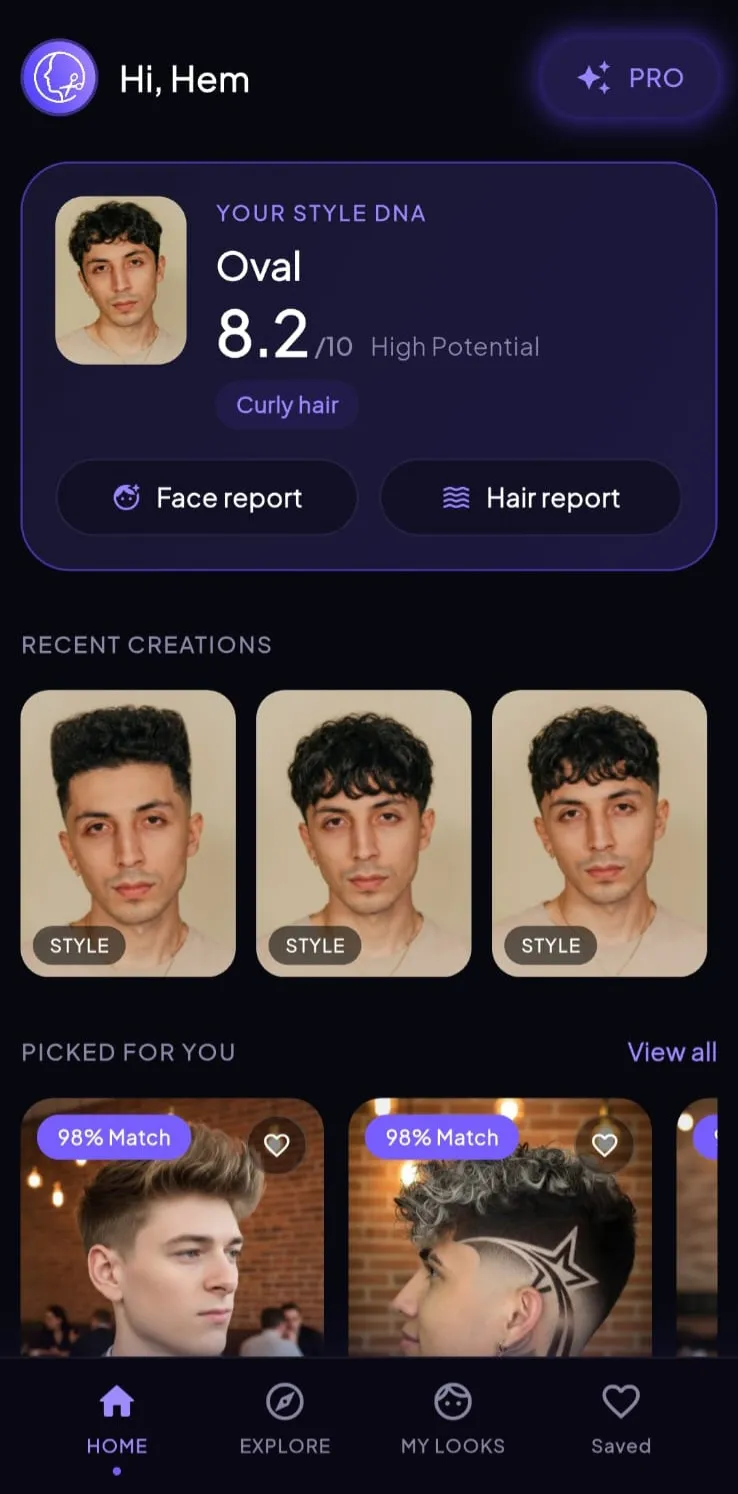
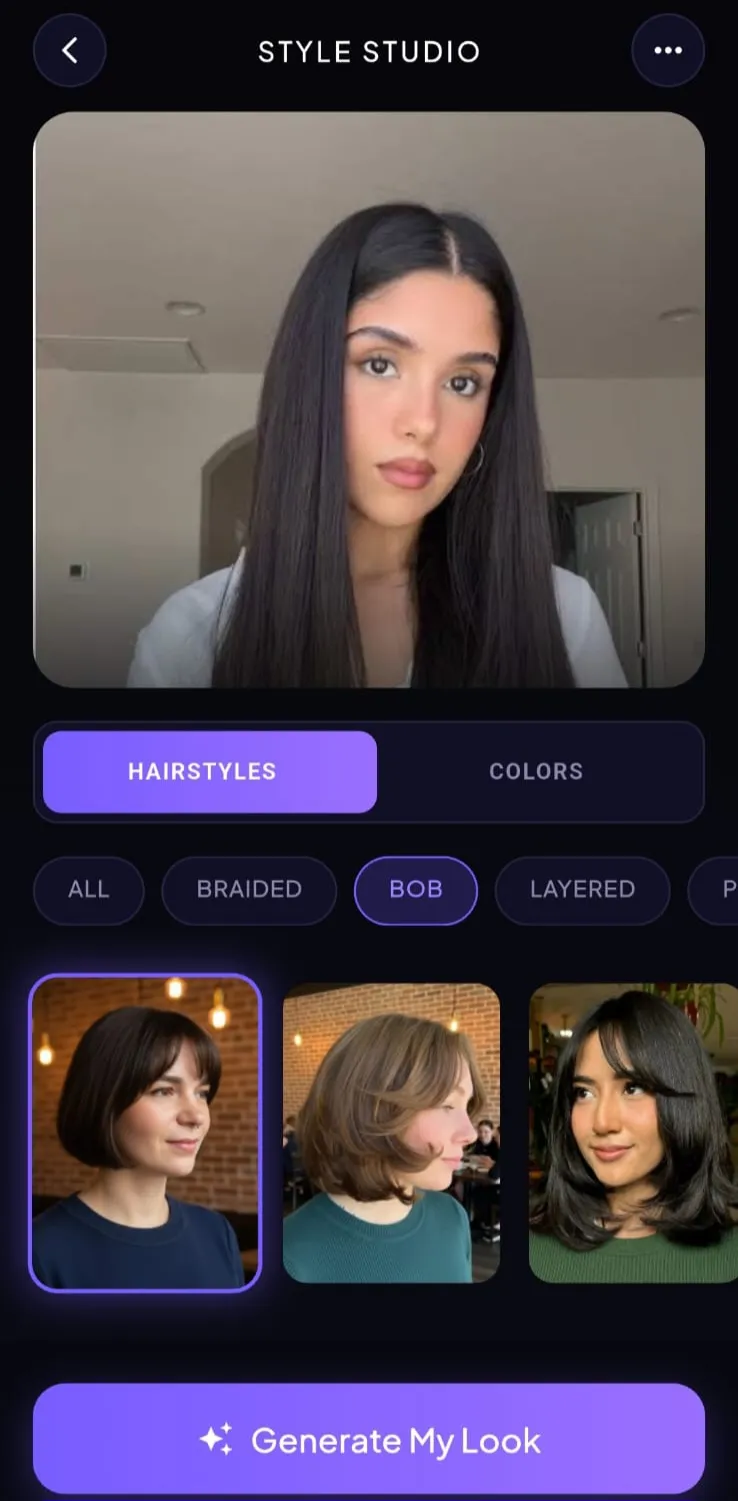
Hairover is built for the step most people skip: seeing a cut on your own face before it happens. Upload a clear photo to get a face and hair analysis, see hairstyle recommendations with a match score, and try cuts and hair colors in Style Studio. Save the ones you would actually wear, and take them to your stylist. Browse the hairstyle guides for more ideas.
FAQ
How do I choose a haircut that suits me?
Start with your hair type and density, then consider your face shape, your daily routine, and how often you can get trims. Narrow it to two or three options and preview them on a clear photo of yourself before you book.
Is face shape the most important factor in choosing a haircut?
No. Hair texture and density usually matter more, because they decide how a cut actually behaves. Face shape is a useful starting point for proportion, not a rule.
What should I bring to a haircut appointment?
Two or three reference photos from the front, side, and back, ideally on someone with similar hair texture. Also be ready to explain how you style your hair and how much time you spend on it.
How do I avoid regretting a haircut?
Make big changes in steps, ask your stylist to start a little longer than your reference photo, and preview the cut on your own photo before the appointment.
How often should I change my haircut?
There is no set rule. Many people keep a shape for a year or more and adjust the length or fringe between trims. Change it when your routine, your hair, or your taste changes.