
long hair · layers
Layered Haircuts forLong Hair
Layered haircuts for long hair, from face-framing and butterfly layers to V-cuts and invisible layers, with who each suits and what to ask for.
Hairover Team
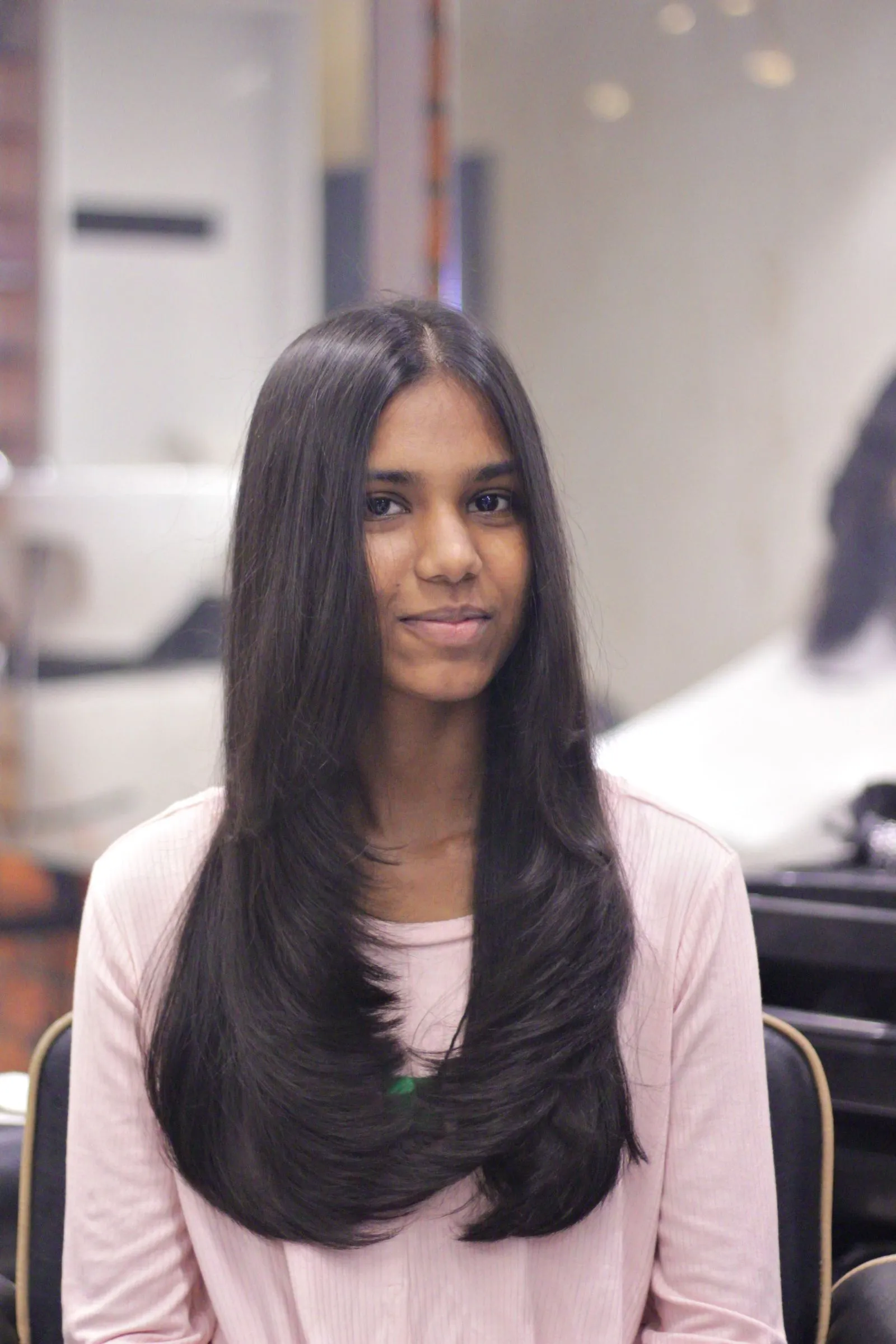
A layered haircut for long hair adds movement and shape while keeping your length. The most popular options are long face-framing layers, butterfly layers, a long shag, a V-cut or U-cut, and invisible (internal) layers. Which one is right depends mostly on your hair’s density: fine hair needs fewer, longer layers to keep the ends full, while thick hair benefits from more layers to remove bulk.
Below are the main layered cuts for long hair, who each suits, how much upkeep it needs, and the exact words to use with your stylist.
Why add layers to long hair?
Long hair without layers can look heavy, flat at the roots, and blunt at the ends. Layers solve this by varying the length of different sections. Shorter pieces near the crown add lift, face-framing pieces open up the face, and internal layers take out weight that pulls the whole shape down.
Layers also make long hair easier to style. Waves and curls hold better, blow-drying gives more volume, and the hair falls into shape more easily when air-dried. The trade-off is that layers need more regular trims to keep their shape, and too many layers on fine hair can make the ends look sparse. A good stylist will balance the two, adding just enough layering to give movement while keeping enough weight at the bottom for the length to still look healthy and full.
Long face-framing layers
The most versatile layered cut. Most of the hair stays one length, and a few layers start at the chin or cheekbone around the face. It opens up the face, adds movement where people see it most, and keeps the ends full.
It suits every hair type and face shape. Fine hair especially benefits, since the rest of the hair stays thick at the ends. Upkeep is low, with trims every eight to ten weeks. Ask for “long hair, mostly one length, with face-framing layers starting at my chin.”
Butterfly layers
Butterfly layers combine short, face-framing layers at the front with long layers through the back. When the hair is pulled forward, it looks like a shorter cut. When it falls back, it shows all the length. That makes it a popular choice if you are tempted by a shorter cut but do not want to lose length. The result is a lot of volume and movement, especially with a round-brush blow-dry.
It suits medium to thick hair, and oval, round, square, and oblong faces. Upkeep is moderate: the front layers need trimming every six to eight weeks. Ask for “butterfly layers: shorter layers starting at my cheekbone in front, long layers through the back, keeping my length.”
Long shag
A long shag puts choppy layers at the crown and around the face, with lighter ends. It looks slightly messy and relaxed, and pairs well with curtain bangs. It suits wavy and curly hair best, and oval, oblong, and square faces.
Upkeep is low. Ask for “a long shag: crown layers, face framing, light ends, keep my length.” Our shag haircut ideas for 2027 cover more shag variations.
V-cut and U-cut layers
These cuts shape the back of the hair. A V-cut tapers the back into a point, and a U-cut tapers it into a soft curve. Both create a long, flowing line when hair is worn down, and they can be combined with face-framing layers.
They suit long, straight to wavy hair, and are a good choice for thick hair that looks too blunt at the back. The shape is most visible when hair is worn straight, so it suits people who often wear it down and sleek. A V-cut can make fine hair look thin at the point, so a U-cut is usually safer. Ask for “a soft U-shape at the back with face-framing layers in front.”
Invisible or internal layers
Invisible layers are cut underneath the top section, so they remove weight without being visible. From the outside, the hair still looks one length. It is ideal for thick hair that feels heavy or looks triangular, especially if you like the look of blunt ends.
It also helps hair dry faster and makes ponytails and buns less bulky. Upkeep is low. Ask for “long hair with blunt ends, and internal layers underneath to remove weight.” Some stylists call these ghost layers.
Layered cuts with bangs
Layers and bangs go together naturally. Curtain bangs blend straight into face-framing layers, so the whole shape flows. Side-swept bangs add asymmetry and work well with long layers. A full fringe with long layers gives a more dramatic, retro look.
If you are trying bangs for the first time, curtain bangs are easiest to grow out. Ask your stylist to cut the fringe slightly longer than your reference photo, since it is easy to take more off later and slow to grow back. Our curtain bangs ideas for 2027 have more detail.
Layers by hair type and face shape
Fine hair: a few long layers or face framing only. Keep the ends blunt.
Thick hair: butterfly layers, a long shag, or invisible layers to remove bulk.
Wavy hair: shag-style layers that help waves form.
Curly hair: layers cut dry, curl by curl, to spread volume evenly. See our curly hairstyles for 2027.
For face shape, round faces often suit layers that start below the chin. Square faces suit soft, wispy face framing. Oblong faces suit layers that add width at the cheeks. Heart faces suit layers that start at the chin to add fullness lower down. If you are unsure of your shape, read the face shape guides.
How to ask for layers and style them
“Layers” means different things to different stylists, so be specific.
- Say where the shortest layer should fall: chin, cheekbone, or collarbone.
- Say how much length you want to keep: “I only want an inch off the bottom.”
- Say whether you want visible layers or invisible ones.
- Bring photos of the front and back, ideally on someone with similar hair density.
- Say how you style your hair: blow-dry, air-dry, or curl.
Once you have the cut, styling decides how much the layers show. A round-brush blow-dry brings out layers best, especially butterfly layers. For an easier routine, rough-dry until almost dry, then use a large round brush only on the face-framing pieces. Velcro rollers at the crown add lift. For waves, a curling wand on a few sections, twisted away from the face, shows off the layers. A light texture spray on the ends adds separation. If you air-dry, scrunch a little light mousse or wave spray through damp hair and twist the face-framing pieces away from your face while they dry.
Layers also need healthy ends to look their best. Split ends make layers look frayed rather than intentional, so use a heat protectant before hot tools and keep up with trims. A gloss treatment between appointments adds shine, which helps each layer catch the light.
Related guides
Try layers on your own photo first
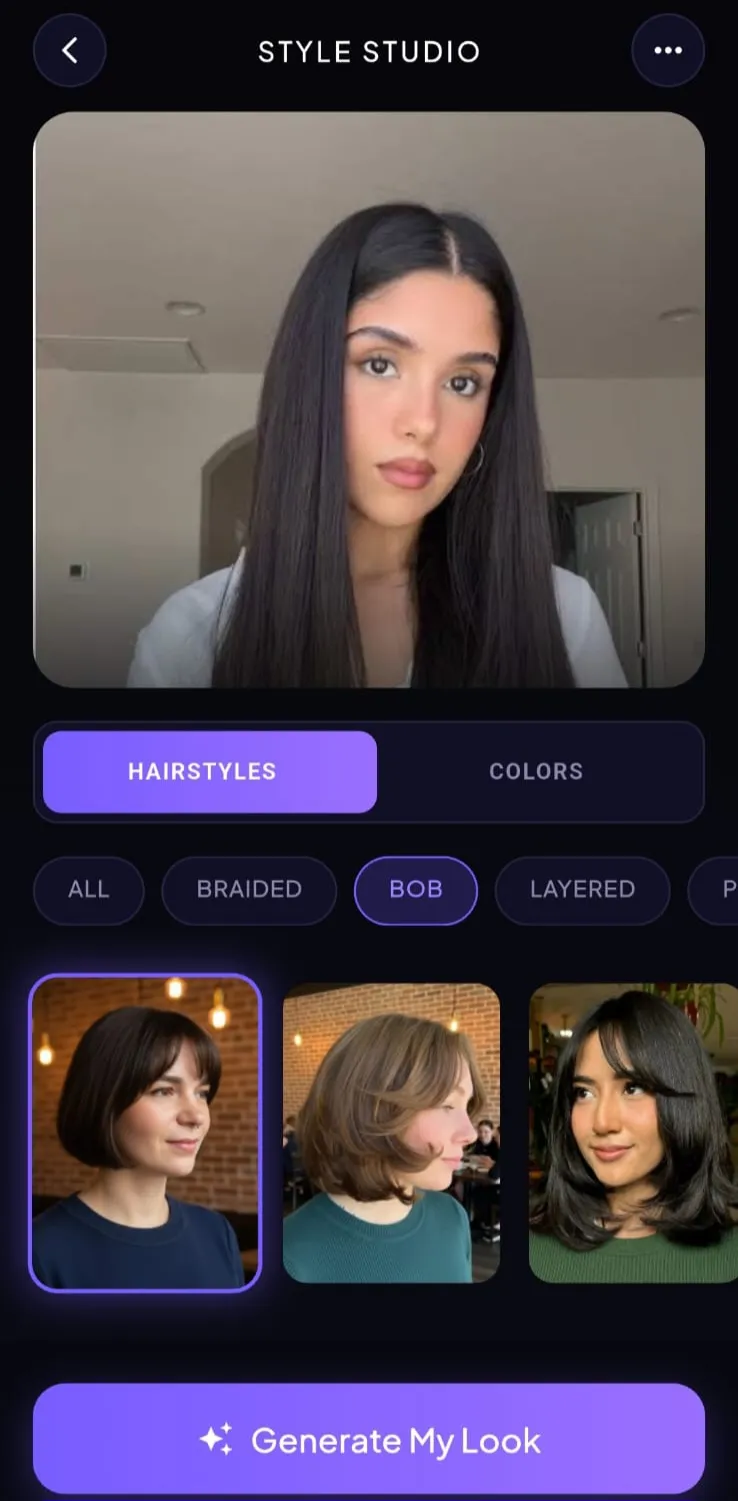
Layers change how long hair frames your face, so it helps to see the shape first. Hairover lets you upload a clear photo and try hairstyles on your own face in Style Studio, with recommendations and a match score for each one. Compare face-framing layers with butterfly layers, then bring your favorites to your stylist.
FAQ
What is the best layered haircut for long hair?
Long face-framing layers are the most versatile. They add movement around the face and keep your length. Butterfly layers add more volume, and invisible layers remove weight without changing the look.
Do layers make hair look thinner?
Too many short layers can, especially on fine hair. A few long layers, or face framing only, keep the ends full while adding movement.
Are layers good for thick hair?
Yes. Layers, especially internal or invisible layers, remove bulk so thick hair falls better and does not look triangular.
How often should long layered hair be trimmed?
Every eight to twelve weeks is common. Face-framing layers may need a quick trim more often to keep their shape.