
thin hair · fine hair
Hairstyles for Thin Hair ThatAdd Volume
Hairstyles for thin hair that add volume, from blunt bobs and soft pixies to long, light layers, plus how to ask for them and style for lift.
Hairover Team

The best hairstyles for thin hair are cuts that keep weight at the ends and add lift at the roots: a blunt bob or lob, a soft textured pixie, a shoulder-length cut with a few long layers, and side-parted styles that create volume at the crown. Fewer, longer layers usually look fuller than lots of short ones, and shoulder length or shorter is often easier than very long hair.
Below are specific cuts for thin and fine hair, who each one suits, how much upkeep it needs, and what to tell your stylist. We also cover styling habits and fringe options that make thin hair look thicker.
Thin hair vs fine hair
These words are often used interchangeably, but they mean different things. Fine hair describes each strand: it is narrow in diameter. Thin hair describes density: there are fewer strands on your head. You can have fine hair that is dense, or coarse hair that is thin. Many people have hair that is both fine and thin.
The difference matters a little when choosing a cut. Fine, dense hair can carry a bit more length because there is plenty of it. Thin hair, especially if you can see your scalp, usually looks better with shorter cuts and blunt ends. If you are thinning noticeably over a short period, see a doctor or dermatologist, since there are many causes and some are treatable.
Bob and lob haircuts for thin hair
Blunt bob. A one-length bob cut straight across at the chin or jaw. The solid line at the ends makes hair look thicker than it is. It suits straight and slightly wavy hair, and oval, heart, and oblong faces. Trims every six to eight weeks keep the line sharp. Ask for “a blunt, one-length bob, no layers, cut at the chin.”
Blunt lob. A slightly longer version that sits between the jaw and the collarbone. It is easier to tie back and grows out well. It suits most face shapes. Ask for “a blunt lob at the collarbone, with only invisible internal texture if any.”
Graduated bob. Stacked layers at the back add volume at the crown, while the front stays longer. It is a good choice if your hair lies flat at the back of the head. It suits straight hair and round or oval faces. Ask for “a graduated bob with stacking at the nape for crown volume, longer at the front.”
French bob with a fringe. A short, chin-length bob with a light fringe. The fringe adds density at the front, where thin hair is most visible. Ask for “a chin-length French bob with a soft, light fringe.”
Short haircuts for thin hair
Soft, textured pixie. A pixie with texture on top and wispy pieces around the face. Short length removes the weight that drags thin hair flat, and texture makes it look fuller. It suits oval and heart faces. Trims every four to six weeks. Ask for “a soft pixie with point-cut texture on top, slightly longer at the front.” Our pixie cut guide shows variations.
Bixie. A grown-out pixie with bob-length layers on top. It gives more coverage than a pixie and still has plenty of lift. Ask for “a bixie with longer layers through the crown and a short nape.”
Short layered cut for men. For men with thin hair, a short textured crop with a low taper is one of the most effective cuts. Matte products add grip without shine. Ask for “a short textured crop, kept slightly shorter on top, with a low taper.” See our guide to haircuts for a receding hairline if thinning is at the temples.
Medium and long hairstyles for thin hair
Shoulder-length cut with long layers. Hair just touching the shoulders, with a few long layers for movement. It looks full and is easy to style. It suits most face shapes. Ask for “shoulder-length, mostly one length, with a few long layers so it does not look flat.”
Long hair with blunt ends. If you want to keep length, keep the ends blunt and trim them regularly so they do not look wispy. Face-framing layers add movement without thinning the ends. Ask for “long, one-length at the ends, with face framing starting at the chin, trimmed every eight weeks.”
Soft waves. Waves add visible volume to fine hair. A cut with long layers holds waves better. Ask for “long layers that will hold a loose wave.” The soft waves guide has styling tips.
Bangs and fringes for thin hair
A fringe can make thin hair look fuller at the front, where it often matters most. Curtain bangs work well because they frame the face without needing a lot of hair. Side-swept bangs add movement. A light, wispy fringe works better than a heavy, blunt one on thin hair, which can need more hair than you have.
Ask your stylist to take the fringe from a small section at the front of the crown so it does not leave the sides looking thinner. Our curtain bangs ideas for 2027 cover the options.
Cuts to avoid with thin hair
These can make thin hair look thinner:
- Lots of short layers, which remove weight from the ends.
- Very long, one-length hair that is not trimmed, which looks sparse at the ends.
- Heavy razor cutting, which can leave wispy, uneven ends.
- Very long hair worn in a center part, which can show the scalp.
Styling tips for thin hair
Small changes make a big difference.
- Use a volumizing mousse at the roots before blow-drying.
- Blow-dry upside down, then flip back and set the crown with a round brush.
- Change your part. Hair lies flat where it is used to parting. A new part creates instant lift.
- Skip heavy products. Oils and heavy creams weigh thin hair down. Use lightweight sprays instead.
- Dry shampoo at the roots adds grip and volume, even on clean hair.
- Use velcro rollers at the crown for a few minutes while you get ready.
Color can help too. Soft highlights and lowlights add depth so hair looks thicker. Our hair color trends for 2027 guide covers techniques like babylights and balayage.
How to ask your stylist for a thin-hair cut
Start by telling your stylist your hair is thin or fine and that your main goal is to make it look fuller. That one sentence changes how most stylists approach the cut. Then be specific.
- Ask for blunt ends and say you want to keep weight at the perimeter.
- Ask them to avoid thinning shears and heavy razor work, unless they explain why your hair needs it.
- Ask where the shortest layer will fall, and keep layers long if you are unsure.
- Mention where your hair looks thinnest, such as the crown, the part, or the temples, so they can place the shape to cover it.
- Say how you style it each morning, and whether you air-dry or blow-dry.
Bring a reference photo of someone whose hair looks similar in density to yours, not just a cut you like on thick hair. A bob on very thick hair will not look the same on thin hair, and a stylist can tell you honestly how close you will get.
Related guides
- Thin, Wiry Hair: Best Cuts and How to Tame It
- Best Haircuts for Fine Hair in 2027
- How to Make Hair Look Thicker: Cuts, Styling, and Color
See a fuller cut on your own photo
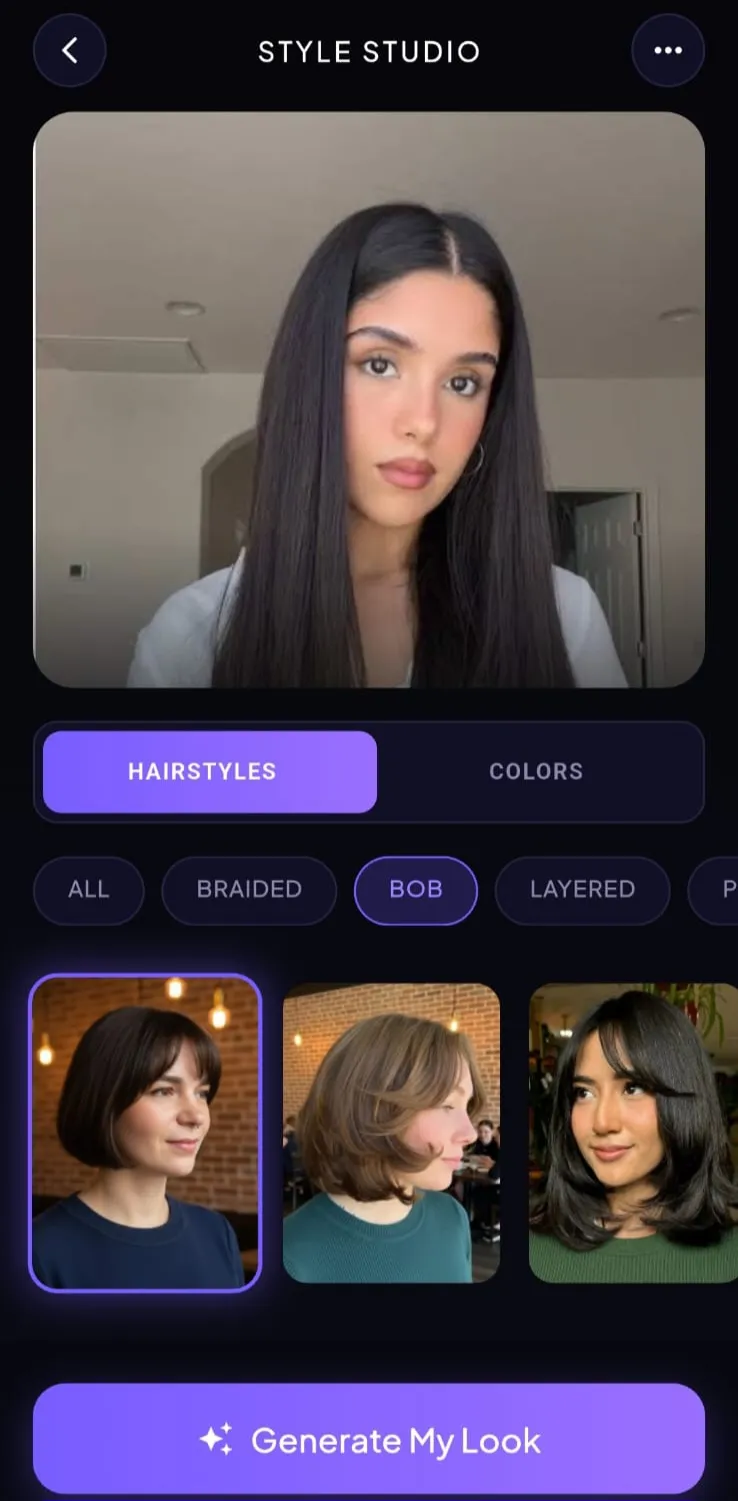
It can be hard to imagine how a shorter or blunter cut will look on thin hair. Hairover lets you upload a clear photo, get a hair analysis that looks at texture and density, and try haircuts on your own face in Style Studio. Compare a blunt bob with your current length before you decide.
FAQ
What is the best haircut for thin hair?
A blunt bob or lob is one of the most reliable choices, because a solid line at the ends makes hair look thicker. Soft pixies, short layered cuts, and long hair with only a few light layers also work well.
Do layers make thin hair look thinner?
Too many layers can, because they remove weight from the ends. A few long layers or face-framing pieces add movement without making the ends look sparse.
Is short or long hair better for thin hair?
Shoulder length or shorter usually looks fullest, since there is less weight pulling strands flat. Long hair can work too if the ends are kept blunt and trimmed regularly.
What is the difference between thin and fine hair?
Fine describes the width of each strand. Thin describes how many strands you have, which is density. Many people have both, and the same cuts usually help.