
barber guide · men
What to Tell Your Barber: Words That Get You theRight Cut
What to tell your barber so you get the cut you pictured, with a simple script, the terms that matter, sample requests for common cuts, and mistakes to avoid.
Hairover Team
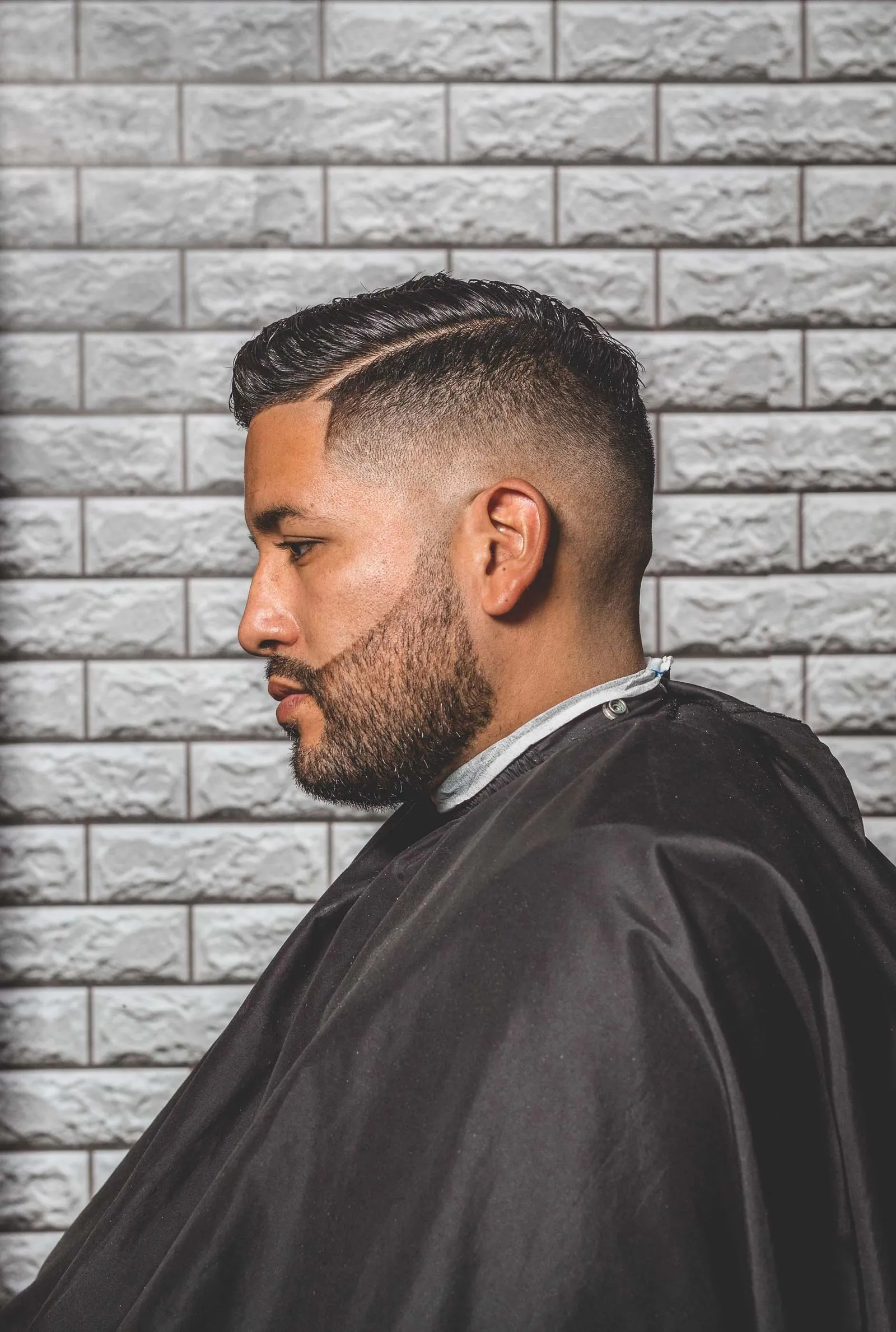
To get the cut you want, tell your barber four things: what you want on the sides, what you want on top, how to finish the neckline, and how you actually wear your hair. Then show a photo. Most bad haircuts come from one of those four things being left to guesswork, not from a lack of skill.
Here is a simple script, plus the words that make it work.
The four-part script
1. The sides. Give the type of blend and how short it should go. “A low taper, down to a number two.”
2. The top. Say how much length should stay, and whether it should be scissor-cut. “Scissors on top, leaving about two inches.”
3. The neckline. “A natural neckline,” or “squared” or “rounded.” Natural is the easiest one to grow out.
4. Your routine. “I just use a bit of product and go, and I come in every six weeks.” This one is the most overlooked part, but it changes what a barber will recommend.
Put together, it sounds like this:
“I’d like a low taper, down to a number two on the sides. Scissors on top, leaving about two inches, with some texture. Natural neckline. I style it in about a minute, and I come in every six weeks or so.”
It takes fifteen seconds and removes most of the guessing.
Terms worth knowing
Fade. Hair blends down to skin or very close to it. You need to say how high it should start. Our low, mid, and high fade guide explains the differences.
Taper. Hair gradually shortens but generally keeps more length than a fade. A taper fade fades only at the sideburns and neck.
Guard or number. The clipper length. A higher number means longer hair. See our haircut numbers chart for exact sizes.
Scissor cut. Cut with scissors, not clippers. This leaves a softer finish and more length on top.
Texture. Choppy cutting that adds movement and separation. Essential if your hair tends to lie flat.
Thin out. Remove bulk without taking off length. Use this if you have thick hair that puffs out at the sides.
Blend. The transition between two lengths should be smooth. If you see a line between the sides and the top, ask for more blending.
Disconnected. The opposite of blended, with a deliberate jump between the sides and the top.
Line-up (or edge-up, shape-up). A crisp, sharp line around the forehead, temples, and neck. It looks great at first but grows out in about a week.
Neckline. The shape of the hair at the back of your neck. Natural, squared, and rounded (or tapered) are the main choices.
Sample requests for common cuts
Clean, simple short cut. “Number two on the sides, blended into scissors on top. Leave about an inch and a half on top, and add some texture. Natural neckline.”
Textured crop. “A low fade, number zero point five at the bottom. Keep two inches on top, pushed forward, and point cut for texture.” See the textured crop guide.
French crop. “A mid fade with a two-inch top, and a straight fringe across the upper forehead. Keep it choppy.” See the French crop guide.
Side part. “Scissor cut all over, shorter on the sides. Taper the back and sides, leaving enough on top for a soft side part, without a hard line.”
Buzz cut. “A number three all over, with a clean neckline and sideburns.” See the buzz cut guide.
Growing it out. “I’m growing my hair out, so please don’t take any length from the top. Just tidy up the back and around the ears.” See long hairstyles for men.
Curly hair. “I want to keep my curls. Please leave them long enough on top, because they shrink when they dry. A low taper on the sides.” See haircuts for thick, curly hair.
Thinning hair. “I’d like a short cut that hides my thinning at the crown. Keep it low contrast on the sides, and don’t leave long pieces on top.” See haircuts for thinning hair.
Bringing photos
A photo does most of the work, but only if you choose well.
Look for your hair type. A straight-hair cut will not look the same on curls, however good the barber is.
Bring several angles. A side shot shows the fade, and a back shot shows the neckline. Most online photos show only the front.
Say what you like about it. “I like how the sides look, but I want more on top” is much clearer than handing over a phone without comment.
Ask if it will work. A good question is, “Would this work with my hair?” Barbers can tell you about cowlicks, density, or a hairline that could change the result.
Habits that lead to bad cuts
Saying “just a trim” or “the usual” to someone new. They have no idea what your usual is. If you found a cut you like, take a picture of it before it grows out.
Using numbers you do not fully understand. If you ask for a “number one,” you may get something much shorter than you imagined. If in doubt, go longer first.
Staying quiet during the cut. Barbers would much rather hear “that’s a bit shorter than I wanted, could we keep the rest longer?” now than see you unhappy later. Speak up early, and put your phone down so you can see what is happening.
Leaving out what you hate. “I don’t want to see my ears” or “I hate it when the top gets too puffy” gives very helpful information.
Going by a trend you have not seen on your head shape. A cut that looks great on someone else may not work with your hair.
If you are not sure what you want
You do not need to know the name of a haircut. Answer these questions instead:
- How long do you want to spend on your hair each morning?
- How often will you actually come in?
- Does your job set any limits on how you can look?
- What did you like and dislike about your last cut?
Then say, “What would you suggest for my hair?” A good barber will enjoy that question. You might also want to read how to choose a haircut before you go in. And it helps to know your face shape, which our free face shape detector can read from a selfie, with your photo staying on your device.
Before you leave the chair
- Ask for the mirror, then look at the back and the sides.
- Check that both sides match. If one looks heavier, say so.
- Ask how to style it and what product to use.
- Ask how long the cut should last, and when you should come back.
- Save the details. Ask for the numbers and note them down, or take a photo to use next time.
If anything seems off after you get home, most barbers will touch it up if you call within a few days. See how to fix a bad haircut if things have gone really wrong.
Related guides
Bring a photo of you, not a stranger
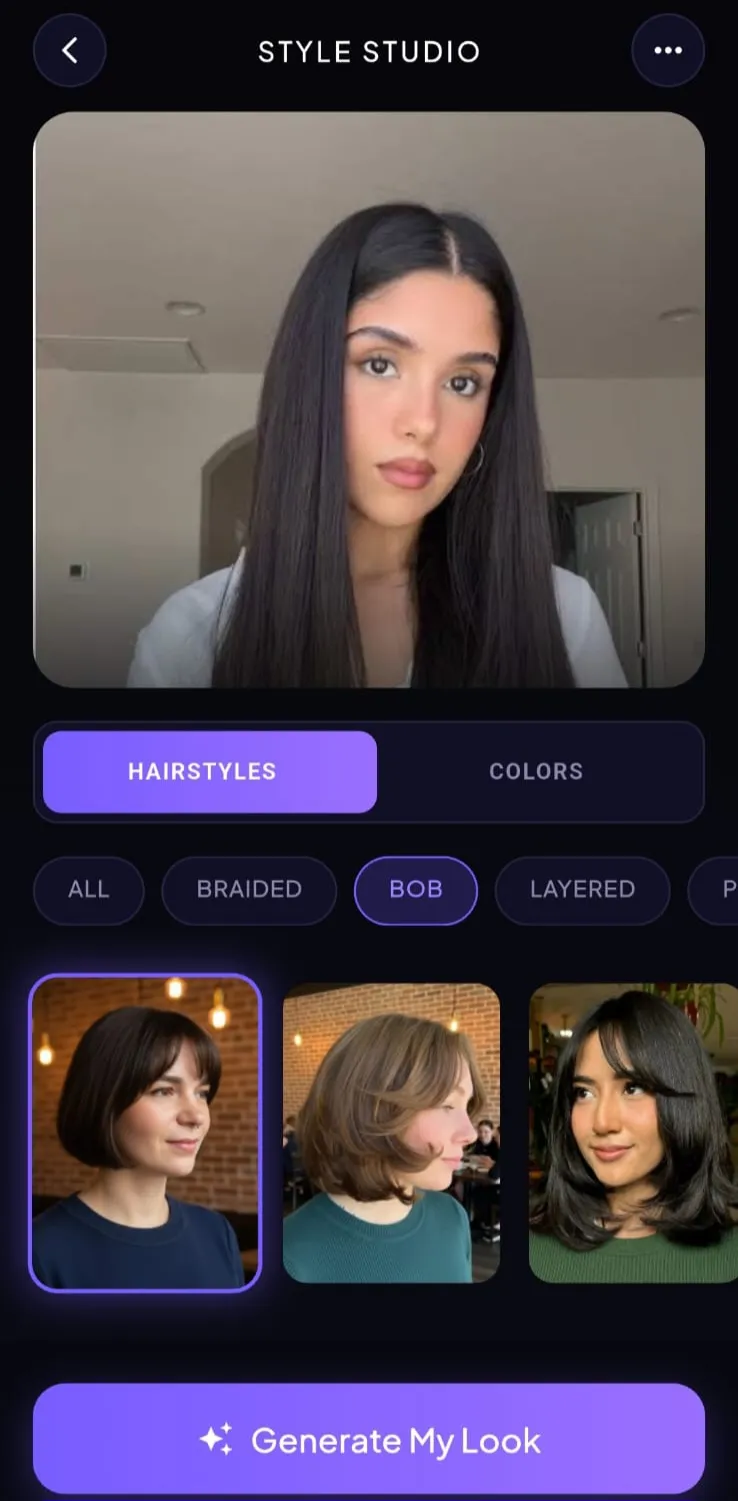
The most useful photo you can show a barber is one of the cut on your own head. Hairover lets you upload a clear photo, get a hair analysis, and try hairstyles on your own face in Style Studio. Save the look you like, and show it at your next appointment.
FAQ
What should I say when I go to the barber?
Cover four things in this order. Say what you want on the sides, what you want on top, how you want the neckline, and how you style your hair day to day. Then show a photo. That is enough information for almost any men's cut.
Is it okay to show a barber a picture?
Yes, and most barbers prefer it. A photo shows shape in a way that words cannot. Bring pictures from the front, side, and back if you can, ideally of someone with hair similar to yours.
What if I don't know what haircut I want?
Say so, and describe your constraints instead. Tell your barber how much time you spend on your hair, how often you plan to come in, and what you disliked about your last cut. A good barber can suggest something from there.
What does a trim mean to a barber?
It usually means keeping the same shape and cutting off a small amount, but the exact amount varies. It is better to show the length with your fingers or give a measurement, such as half an inch off the top and tidy the sides.