
barber guide · men
Haircut Numbers Explained: Clipper GuardSize Chart
What haircut numbers mean, with a clipper guard size chart in inches and millimeters, which number to ask for on the sides and top, and common combinations.
Hairover Team

Haircut numbers refer to clipper guard sizes, and a higher number means longer hair. Each full number adds about 1/8 inch (roughly 3 mm), so a #1 leaves 1/8 inch, a #2 leaves 1/4 inch, and a #8 leaves one inch. If you can name the numbers you want, you have the most precise way to describe a clipper cut to any barber.
Clipper guard size chart
| Number | Inches | Millimeters | What it looks like |
|---|---|---|---|
| #0 | Under 1/16 | Under 1.5 | Almost bare, with scalp fully visible |
| #0.5 | 1/16 | 1.5 | Stubble length, used for fades |
| #1 | 1/8 | 3 | Very short, with visible scalp |
| #1.5 | 3/16 | 4.5 | Short fade step, mostly a blending length |
| #2 | 1/4 | 6 | Classic buzz, covers most scalp |
| #3 | 3/8 | 10 | Soft buzz, a common side length |
| #4 | 1/2 | 13 | Long buzz, with some texture starting |
| #5 | 5/8 | 16 | Short crop, with visible texture |
| #6 | 3/4 | 19 | Short, full cut |
| #7 | 7/8 | 22 | Medium-short, sits close to the head |
| #8 | 1 | 25 | Longest standard guard, can be combed |
These are the most common sizes, based on standard American clipper guards. Numbers and sizes can differ between brands, so if your barber’s clippers look different, ask them what each one leaves. Hair texture also changes the result. A #3 on curly hair looks shorter than a #3 on straight hair, since curls coil back toward the head.
Clipper lever settings
Most clippers also have a small lever on the side, which adjusts the blade slightly. Closed, it cuts at the guard’s full length. Open, it cuts a bit shorter, by around a half step. So a barber can get a length between a #1 and a #2 without changing the guard. This is how they create smooth fades, which is why a good fade usually has more steps than the numbers on the chart.
Common haircut number combinations
All-over buzz: #2 or #3. One guard across the whole head. Our buzz cut guide goes through the different styles.
Short back and sides: #2 or #3 on the sides, scissors on top. A classic. The sides stay neat and the top stays long enough for a side part or a textured style.
Crew cut: #2 on the sides, #4 on top. The top is a little longer than the sides, and it needs almost no styling.
Low fade: #0.5 at the bottom up to #2 or #3. A short blend near the ear. Our guide to low, mid, and high fades explains how height changes the look.
Skin fade: bare skin at the bottom, up through #0.5, #1, and #2. The crispest option, with the shortest lifespan.
Taper: #2 or #3 at the bottom edge, blending to scissors. It keeps more length than a fade. See our taper fade guide.
Textured crop: #1 or #2 on the sides, scissors on top. The top is left long enough to push forward. See our textured crop guide.
How to choose a number
Three simple rules cover most situations:
Start longer than you think. A longer guard can always go shorter, and going the other way means waiting a few weeks. Hair grows about half an inch a month, which we go into in how fast hair grows. So a #4 mistake takes minutes to fix, while a #1 mistake takes around a month.
Think about your scalp color. A dark-haired person with light skin has a stronger contrast at short lengths, so even a #2 can look quite bald. Blond or gray hair blends in with the scalp more easily. If you do not want to show much scalp, try a #3 or higher.
Consider your hair’s density. Thin hair shows more scalp at every length. If this is a concern, a slightly longer guard often looks much fuller than the number would suggest. See haircuts for thinning hair.
How to ask at the barber
Numbers work well for clipper sections, but not for the top of most haircuts. Hair on top is often cut with scissors, so it is usually better to describe it in inches, or show it with your fingers.
Here is a good example:
“Number two on the sides, blended up to scissors on top. Please leave about two inches on top. A natural neckline, and clean up the sideburns.”
You can find more phrases and examples in our guide on what to tell your barber.
Some barbers talk in millimeters, particularly outside North America, and some use different guard labels. It is still a good idea to bring a photo to back up the numbers. Photos show the shape, and numbers show the length. You want both.
Cutting your own hair
If you are using home clippers, check the numbers on your own guards before you begin. Cheaper kits are not always accurate, and a “#2” guard can be slightly longer or shorter than the barbershop version.
A few tips:
- Always begin with the longest guard you are considering.
- Cut dry hair, since wet hair clumps together and cuts unevenly.
- Go against the direction of hair growth, and check from several angles.
- Clean and oil the blades regularly, or they can pull at your hair.
Why your number looks different each time
If you have ever asked for the same number and gotten a different result, there are a few possible reasons:
- The lever was in a different position.
- The clipper or guard was a different brand.
- Your barber clipped against the grain on one visit and with it on the next. Cutting against the grain gives a shorter result than cutting with the grain.
- Your hair had a different amount of product, or it was damp.
If you find a length you like, ask your barber to write it down, or note it on your phone. Include the guard number, lever position, and direction.
Related guides
Picture it before you pick a number
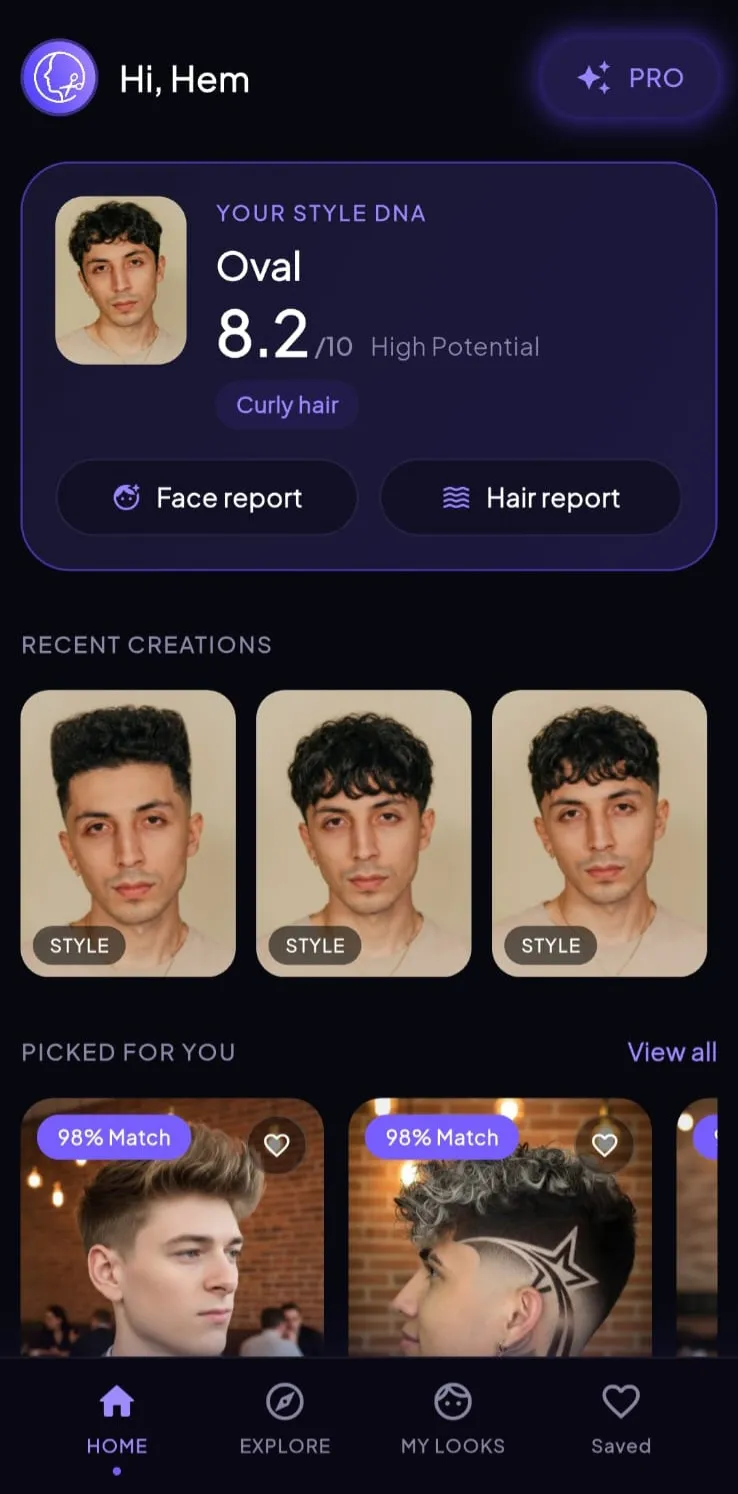
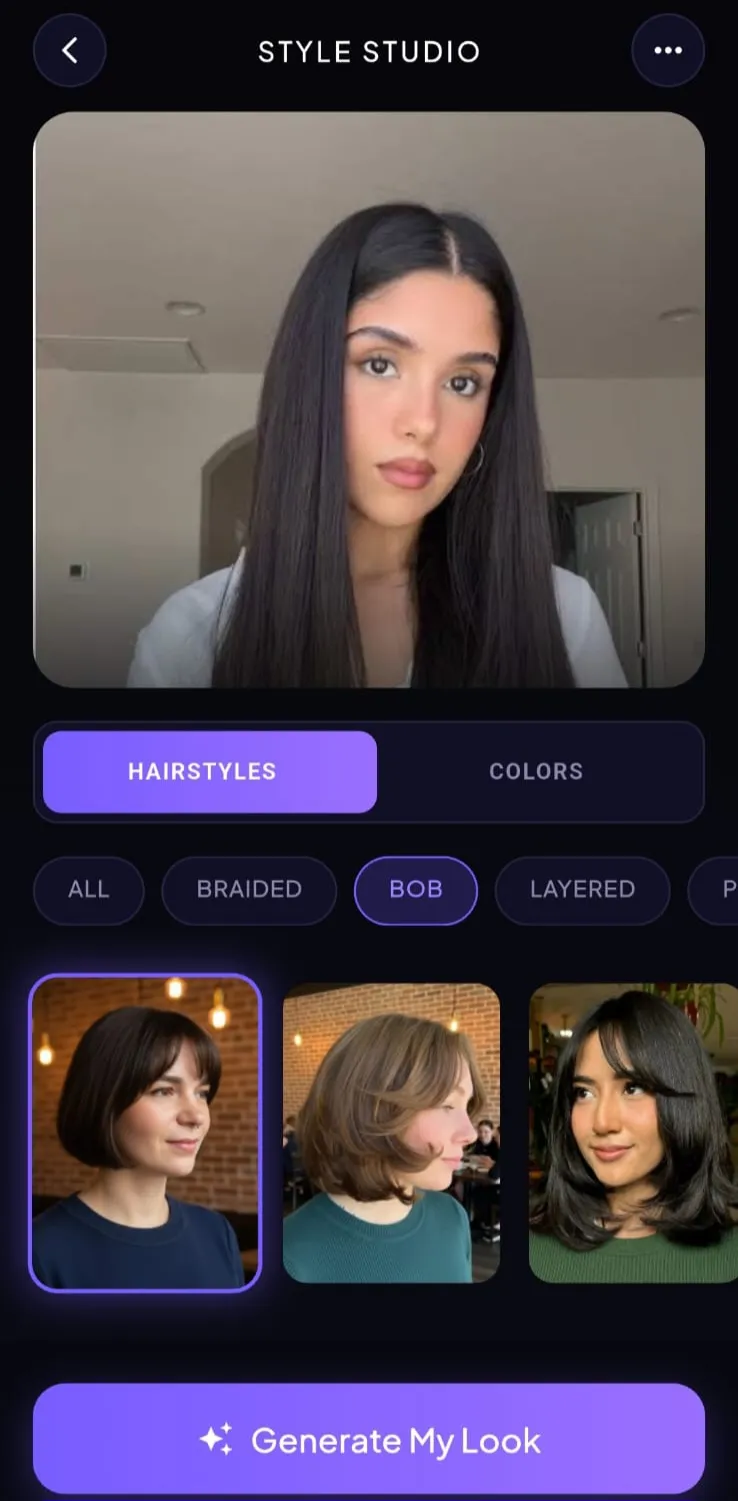
Numbers tell you the length, but they do not tell you how it will look on your head. Hairover lets you upload a clear photo, get a hair analysis, and try hairstyles on your own face in Style Studio. Once you know the shape you like, you can match it with the numbers in this guide.
FAQ
How long is a number 2 haircut?
A #2 guard leaves about 1/4 inch, or roughly 6 mm of hair. It is the most common length for a classic buzz cut and a popular choice for the sides of short men's haircuts.
Is a higher number shorter or longer?
Longer. The number goes up as the length goes up, so a
What is a number 0 haircut?
A
What number should I ask for on the sides?
For a neat, classic short cut, a #2 or #3 is a common starting point on the sides. For a fade, a barber works through several lengths, often from #0 or #0.5 up to #2 or #3. If in doubt, ask for a longer number first, since going shorter is easy.