
bangs · fringe
Curtain Bangs Ideasfor 2027
Curtain bangs ideas for 2027, from wispy and long to bottleneck and curly versions, with which face shapes and hair types they suit and how to ask.
Hairover Team

Curtain bangs are still one of the most requested fringes heading into 2027, and the most popular versions are longer, softer, and more blended than before. The curtain bangs 2027 is leaning toward start around the cheekbone, part in the middle, and sweep out to the sides, so they frame the face rather than covering it. They suit most face shapes and hair types, which is a big part of why they keep showing up on Pinterest and Instagram.
Below are the main curtain bang styles, who each suits, how much upkeep they need, and how to ask for them. One tip applies to all of them: ask your stylist to cut a little longer than your reference photo. You can always take more off at the next visit, but bangs that are too short take weeks to fix.
What are curtain bangs?
Curtain bangs are a fringe parted in the center, with each side sweeping away from the face like a pair of opened curtains. They are shorter in the middle, often around the eyebrows or the bridge of the nose, and longer at the sides where they blend into the rest of the hair. Because they are parted and not blunt, they grow out more gracefully than a full fringe. They also leave more of the forehead visible, which feels less heavy if you have never had bangs before. You can push them back with a headband or clip them away for the gym, which makes them practical for daily life. For a deeper look at the cut itself, see our curtain bangs hairstyle guide.
Long, wispy curtain bangs
The longest and softest version. The center sits around the cheekbone and the sides blend into face-framing layers almost immediately. It looks lived-in and is the easiest version to try if you have never had a fringe. If you decide bangs are not for you, you will barely notice them after a few weeks.
It suits oval, square, heart, and oblong faces, and straight to wavy hair of any density. Upkeep is low: trim every five to six weeks, or just let them grow into layers. Ask for “long curtain bangs starting at the cheekbone, blended into face-framing layers.”
Classic eyebrow-length curtain bangs
The center pieces hit around the eyebrows, opening into a soft arch. This version reads more clearly as bangs and has a slightly retro feel.
It suits oval, oblong, and heart-shaped faces, and is a good choice if you want to shorten a long face or soften a high forehead. Straight and wavy hair is easiest. Trims every three to four weeks keep it from falling in your eyes. Ask for “curtain bangs that start at the brow, parted in the center, with longer sides.”
Bottleneck bangs
Bottleneck bangs are narrow and short at the center, then widen and lengthen around the cheeks, like the shape of a bottle’s neck. They sit between a curtain fringe and a full fringe.
They suit oval and round faces, and fine to medium hair that would look thin as a full, blunt fringe. Upkeep is moderate, with trims every three to four weeks. Ask for “bottleneck bangs: narrow and short in the center, widening and getting longer toward the cheekbones.”
Curtain bangs for curly and wavy hair
Curly curtain bangs are cut dry so each curl can be shaped where it sits. They are shorter than they look when wet, so a careful stylist will leave extra length.
They suit loose waves to tight curls, and most face shapes. Styling is simple: a bit of curl cream and diffuse, or let them air-dry. Ask for “curtain bangs cut dry, curl by curl, longer than I think I need.” For more curl shapes, see curly hairstyles for 2027.
Curtain bangs with a bob, shag, or long layers
Curtain bangs pair with almost any length, but three combinations are especially popular.
- With a bob. A chin-length bob and curtain bangs make a neat, French-inspired look. It suits oval and heart shapes. Ask for “a chin-length bob with soft curtain bangs.”
- With a shag. Choppy crown layers and curtain bangs create a 70s-style shape that works best on wavy hair. See our shag haircut ideas.
- With long layers. The most versatile pairing. The bangs blend into face-framing layers and the rest of the length stays. Ask for “long layers, with face framing that starts at curtain-bang length.”
Curtain bangs and face shape
Curtain bangs work on more face shapes than most fringes, but small adjustments help.
- Round faces: start the bangs slightly lower, around the cheekbone, and keep the sides angled down so they lengthen the face.
- Square faces: keep the ends soft and wispy rather than blunt, so they contrast with a strong jaw.
- Heart faces: curtain bangs balance a wider forehead nicely. Keep them soft at the center.
- Oblong faces: shorter, eyebrow-length bangs help shorten the face visually.
- Oval faces: most versions work.
Curtain bangs are less forgiving if you have a strong cowlick right at the front hairline, or very fine hair that separates easily. Neither rules them out, but both mean more daily styling. Tell your stylist about any cowlick before they cut, so they can leave extra length and weight where it is needed.
If you are unsure of your face shape, the face shape guides explain each outline and how to measure it.
How to style curtain bangs
Styling takes two to three minutes. Wash or dampen just the bangs if they look flat. Blow-dry them forward over your forehead, moving the dryer side to side to remove any cowlick. Then split them in the middle and use a round brush or your fingers to roll each side back and away from the face. A light texture spray holds the shape without stiffness. Avoid heavy creams near the bangs, because the oils on your forehead already make them separate faster than the rest of your hair.
If you have no time, a velcro roller on each side while you do your makeup gives the same curve. On second-day hair, a little dry shampoo at the roots of the bangs removes oil and adds lift.
How to grow out curtain bangs
Curtain bangs are the easiest fringe to grow out. As they get longer, ask your stylist to blend them into face-framing layers so there is no awkward stage. Side-sweeping or tucking them behind the ear also works in between.
A few tricks help during the in-between weeks. Twist each side back and pin it with a small clip for a neat look. Use a deep side part so the longer piece sweeps across the forehead. On wash days, blow-dry them back instead of forward so they lie flat against the sides of the face. Within two to three months, most curtain bangs have grown into face-framing layers that look intentional.
Related guides
See curtain bangs on your own face
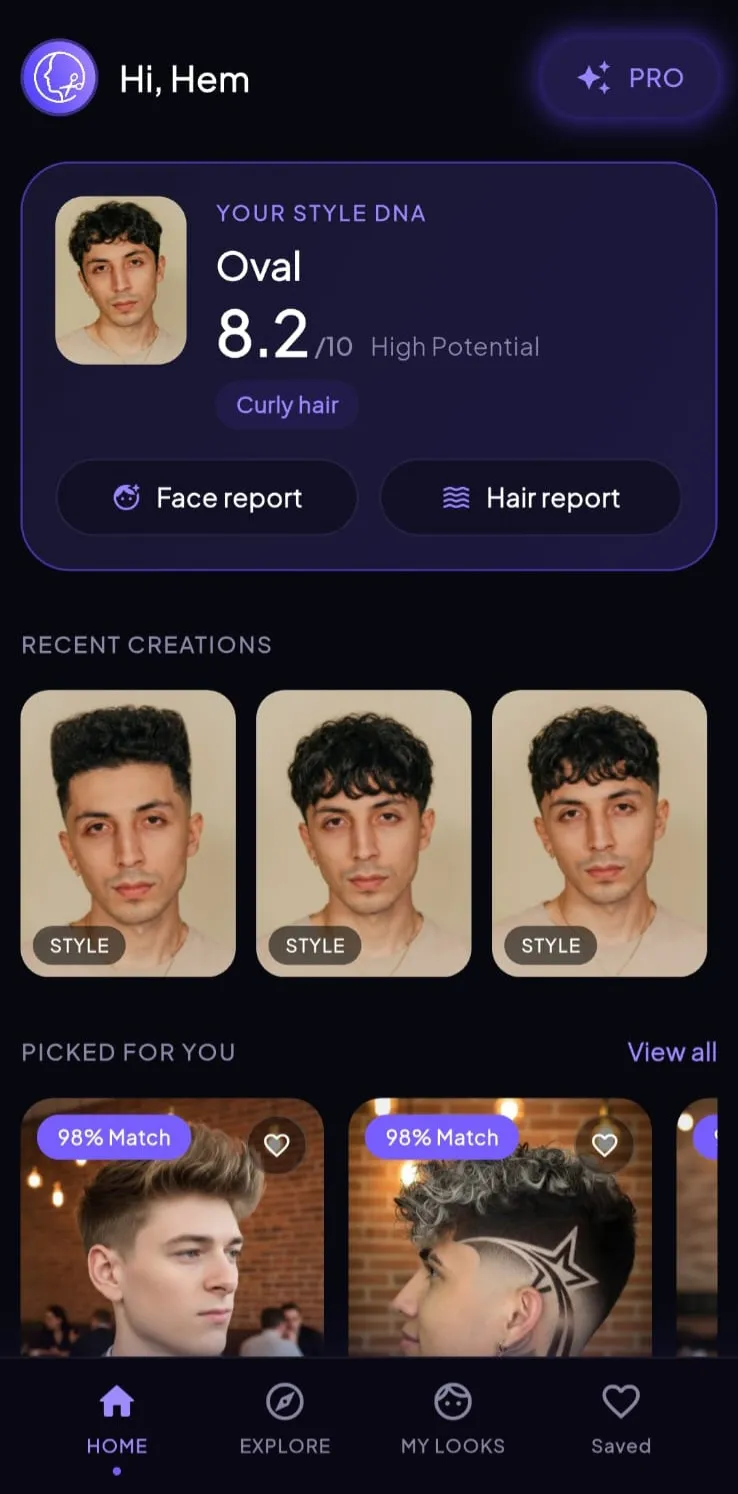
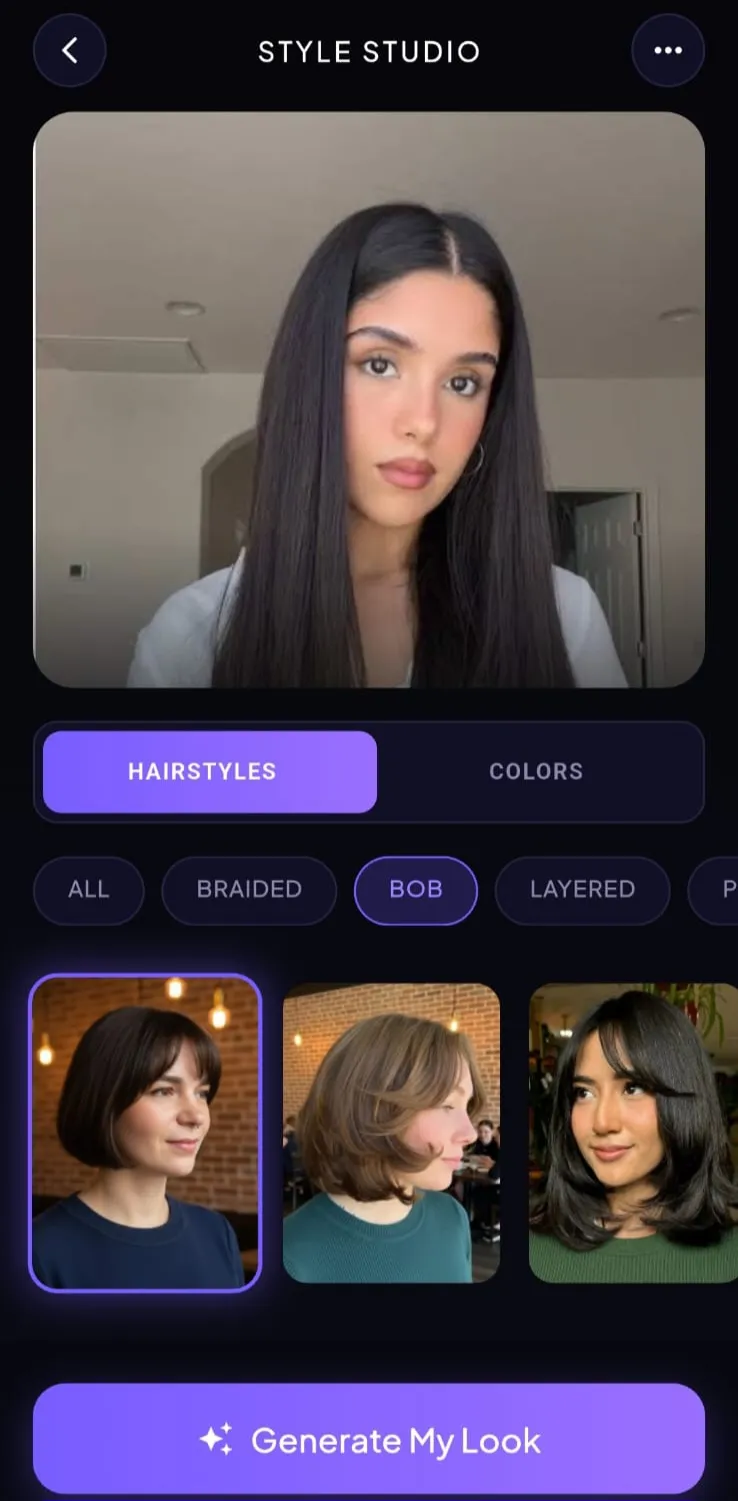
A fringe changes the look of your face more than almost any other cut, so seeing it first is worth the time. Hairover lets you upload a clear, front-facing photo and try hairstyles with different fringes on your own face in Style Studio, along with hair color. Save the versions you like and take them to your stylist.
FAQ
Do curtain bangs suit every face shape?
They suit more face shapes than most fringes because they part in the middle and frame the face rather than covering it. Length and where the bangs start are what make the difference for each shape.
How often do curtain bangs need trimming?
Usually every three to five weeks. Longer curtain bangs can go longer between trims because they blend into face-framing layers as they grow.
Can you get curtain bangs with curly hair?
Yes. Ask for them to be cut dry, curl by curl, and left slightly longer than you think, since curls spring up as they dry.
How do you style curtain bangs without a round brush?
Blow-dry them forward first, then split them in the middle and push each side back with your fingers while the hair cools. A velcro roller for a few minutes also works.