
women · over 70
Hairstyles for Women Over 70: Easy,Flattering Cuts
Hairstyles for women over 70 that suit finer, grayer hair and easier routines, from soft pixies and short bobs to chin-length layers, with what to ask your stylist.
Hairover Team

The most flattering hairstyles for women over 70 are usually short to chin-length cuts with soft layers and some lift at the crown: a soft pixie, a short layered bob, a chin-length bob with a solid edge, or a rounded cut for natural curls. These suit finer, grayer hair, look finished with little styling, and frame the face without dragging it down.
That said, age alone shouldn’t decide your haircut. Hair texture, density, and how much time you want to spend on it matter far more. Below are nine cuts that work well, grouped by what your hair is like now.
How hair changes, and why it affects the cut
MedlinePlus, from the U.S. National Library of Medicine, notes that with age hair strands become smaller and carry less pigment, hair growth slows, and many follicles stop producing new hairs, so thick, coarse hair gradually becomes thinner, finer, and lighter (MedlinePlus). In practice, that means:
- Fine hair loses volume and lies flat, so cuts with lift and a solid edge help.
- Gray hair can feel coarser or wiry and can stick out, so shapes that work with that texture are easier than fighting it.
- Hair grows back more slowly, so a cut that grows out gracefully between trims is worth more than one that looks perfect for a week.
Short cuts for fine or thinning hair
1. Soft pixie with a longer top. Short at the nape and around the ears, with two to three inches on top that can be tousled forward or swept to one side. The length on top adds height where hair is often thinnest. Ask for “a soft pixie, shorter at the back, longer on top, no heavy thinning.”
2. Short layered bob. A bob around the ears or chin with short layers at the crown. The layers lift away from the scalp, and a fairly blunt outline keeps the ends looking full. This is a good choice if a pixie feels too short.
3. Chin-length bob with a side part. A one-length or lightly layered bob at the chin, worn with a deep side part. Moving the part lifts the roots and covers areas where the scalp shows. For more on this, see our guide to haircuts for women over 60 with thin hair, which covers thinning on top in detail.
Cuts for coarse or wiry gray hair
4. Tapered crop. A short cut tapered at the neck and sides, with texture on top. Coarse gray hair holds this shape well and needs very little product.
5. Bixie (pixie-bob). Longer than a pixie and shorter than a bob, with layers throughout. It lets wiry hair move rather than stand up. Our pixie vs. bixie guide explains the difference.
Cuts for thicker hair you want to keep longer
6. Shoulder-length cut with face-framing layers. If your hair is still dense, there’s no reason to go short. Shoulder length with layers starting at the cheekbones keeps movement near the face and is long enough to tie back.
7. Soft lob. A long bob just above the shoulders, with light layering. It’s a practical middle ground: it dries faster than long hair but can still be tucked or clipped.
Cuts for curly or wavy hair
8. Rounded curly crop or short curly bob. Cut dry so the curls sit in an even, rounded shape. Natural curls add volume on their own, and this shape needs no heat at all. If your curl pattern has changed over the years, ask your stylist to cut for the hair you have now.
9. Short wavy shag. Choppy layers through the crown let soft waves show and hide flat spots. Scrunch in a little mousse and let it air-dry.
Easy styling as you get older
If reaching up to style your hair is harder than it used to be, choose a cut designed to dry into shape. Tell your stylist so at the start of the appointment. A few habits also help:
- Volumizing mousse at the roots on damp hair adds lift with no tools.
- A wide-tooth comb or fingers instead of brushing, which is gentler on fragile hair.
- Gloss or toner for gray hair can soften yellow or brassy tones. See hair gloss vs. toner.
- A trim every five to eight weeks for short cuts, so the shape never grows out into something harder to manage.
What to be careful with
- Very long hair with thin ends, which pulls the face down visually and can look sparse.
- Tight, set curls and lots of hairspray, which can look stiff and dated compared with softer movement.
- Heavy, dark dye on gray roots, which shows regrowth quickly. Many women find going gray, or blending it with lowlights, easier to keep up. Our gray hair ideas cover the options.
Sudden shedding or patchy hair loss has many possible causes besides age, from thyroid problems to medicines, and is worth showing to a dermatologist (AAD).
Related guides
- Hairstyles for Women Over 60 in 2027
- Short Hairstyles for Women Over 50 in 2027
- Hairstyles With Glasses
- Hairstyles for Thin Hair That Add Volume
See a new cut before you commit
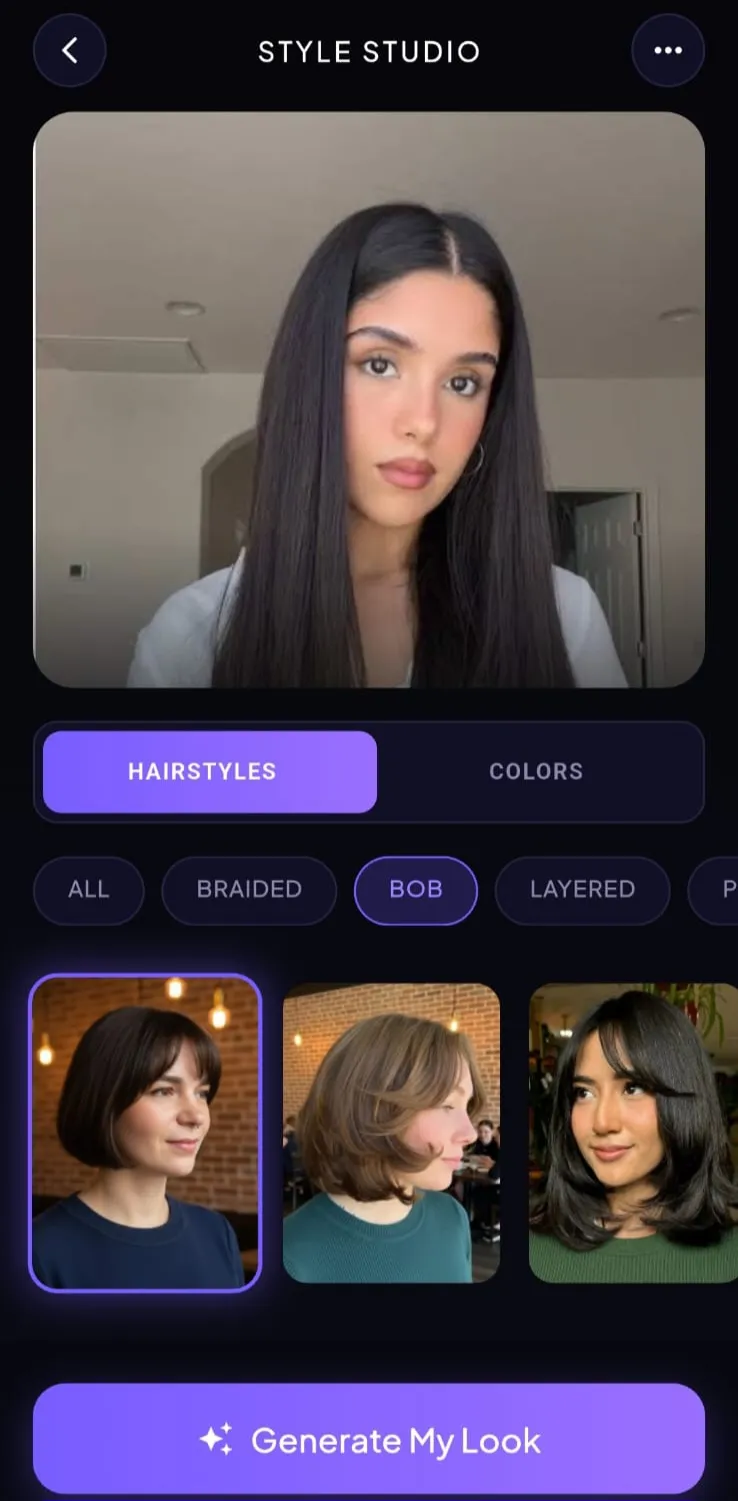
A big change, like going from shoulder length to a pixie, is easier to decide when you can see it. Hairover’s Style Studio lets you try haircuts and hair colors on your own photo. See how hairstyle try-on works.
FAQ
What is the most flattering haircut for a woman over 70?
There is no single best cut, but soft pixies, short layered bobs, and chin-length cuts with a solid edge suit the most people, because they add volume to finer hair and are quick to style. Pick based on your hair texture and how much time you want to spend on it.
Should women over 70 have short hair?
No rule says so. Shorter cuts are often easier to style and make finer hair look fuller, which is why many women choose them. If your hair is still thick and you enjoy wearing it up, shoulder-length or longer can look great.
What hairstyle makes an older woman look younger?
Movement and softness usually help more than any specific length. Soft layers, a side-swept fringe, some lift at the roots, and a healthy shine tend to look fresher than a stiff, set shape or very long hair with thin ends.
What is the easiest hairstyle to manage over 70?
A short, layered pixie or crop that you can towel-dry and finish with your fingers. It needs a trim every five to six weeks but very little daily styling.
Is it better to cut hair shorter if arthritis makes styling hard?
Often, yes. Cuts that look finished without a round brush or curling iron, such as a pixie or short layered bob, take the least work with your hands and arms. Tell your stylist you want a cut that dries into shape.