
hair color · mens hair
Best Hair Color for aReceding Hairline
The best hair color for a receding hairline keeps contrast with your scalp low. Which shades help, which to skip, and how to dye safely at home.
Hairover Team

The best hair color for a receding hairline is one with low contrast against your scalp, usually a shade close to your natural color or a touch softer. Going much darker often makes things worse, because dark hair against a pale scalp draws a sharp line around the temples. If you’re going gray, blending gray usually looks more natural than covering it completely. Color can make a hairline less obvious, but it won’t change the hairline itself.
Why contrast matters
What people notice about a receding hairline is often the edge where hair meets skin. A dark, flat color against light skin makes that edge sharp. Softer color blurs it. That’s why someone with light hair and a fair scalp can have a similarly placed hairline that gets noticed less.
The same is true at the crown. A bold single-tone dye job can make the scalp more visible through the hair, especially on fine hair.
Best shades by starting color
Black or very dark brown hair
If your skin is also deep, your hair and scalp already have low contrast, and your natural color may be the best choice. If your skin is light, you may want to try a very soft dark brown rather than jet black. Avoid box dye labeled blue-black.
Medium brown hair
Stay within a level or so of your natural shade. Soft, cool browns or an ash tone reduce contrast without looking faded. Our brown hair ideas for 2027 shows various tones, though many of the examples are for women.
Light brown or dark blonde hair
You’re in a good place. Avoid going darker. A little warm or sandy tone adds dimension without highlighting the edge.
Gray or graying hair
Leave it, blend it, or tone it. A partial gray-blending service keeps some gray visible and looks more natural as it grows. Solid dark dye over gray hair can bring both a harsh line and a visible regrowth problem. See our men’s hair color for 2027 for more detail, and gray hair ideas for 2027 if you’d prefer to embrace it.
Colors and techniques to skip
- Jet black on a light scalp. Maximum contrast, and it looks artificial around the temples.
- Bright highlights at the front. They point straight at your hairline.
- Platinum on dark, thin hair. Bleach can make hair look thinner, and regrowth creates a dark line right where you don’t want attention.
- Repeat box dye over the same area. The color builds up and turns flat and dark over time.
Pair color with the right cut
Color only does part of the job. Shape does more. A shorter textured cut with hair brought forward usually does the most to disguise a receding hairline. Our guide to the best haircuts for a receding hairline walks through the options, and haircuts for men with thinning hair helps if density is a concern too.
A very close cut also reduces contrast because there’s less hair to compare with scalp. A buzz cut needs no color at all and is a common choice for that reason.
Salon or at home
A colorist can blend gray and select tones more precisely, which is useful for subtle work. Home dye can be fine for a one-level shift or a simple refresh. If you do it at home:
- Patch test every time. The FDA advises you to do a patch test on your skin every time before dyeing your hair, and it warns that some coal-tar dyes can cause allergic reactions that may lead to skin irritation and hair loss. It also notes that you can still react to the dye on your hair even if the skin test shows nothing.
- Keep it off your brows and lashes. The FDA says this can cause blindness with coal-tar dyes, so match your brows another way or leave them alone.
- Follow the timing on the box. Don’t leave it longer to “make it stronger.”
- Stop and seek medical advice if your scalp reacts. This matters more with a hairline you already want to protect.
Color can’t diagnose anything
A receding hairline is common, but if your hair loss is sudden, patchy, or comes with itching or soreness, see a doctor or dermatologist. The American Academy of Dermatology points out that without an accurate diagnosis, treatment is often ineffective. Choosing a shade doesn’t replace that visit.
Before you commit to a shade
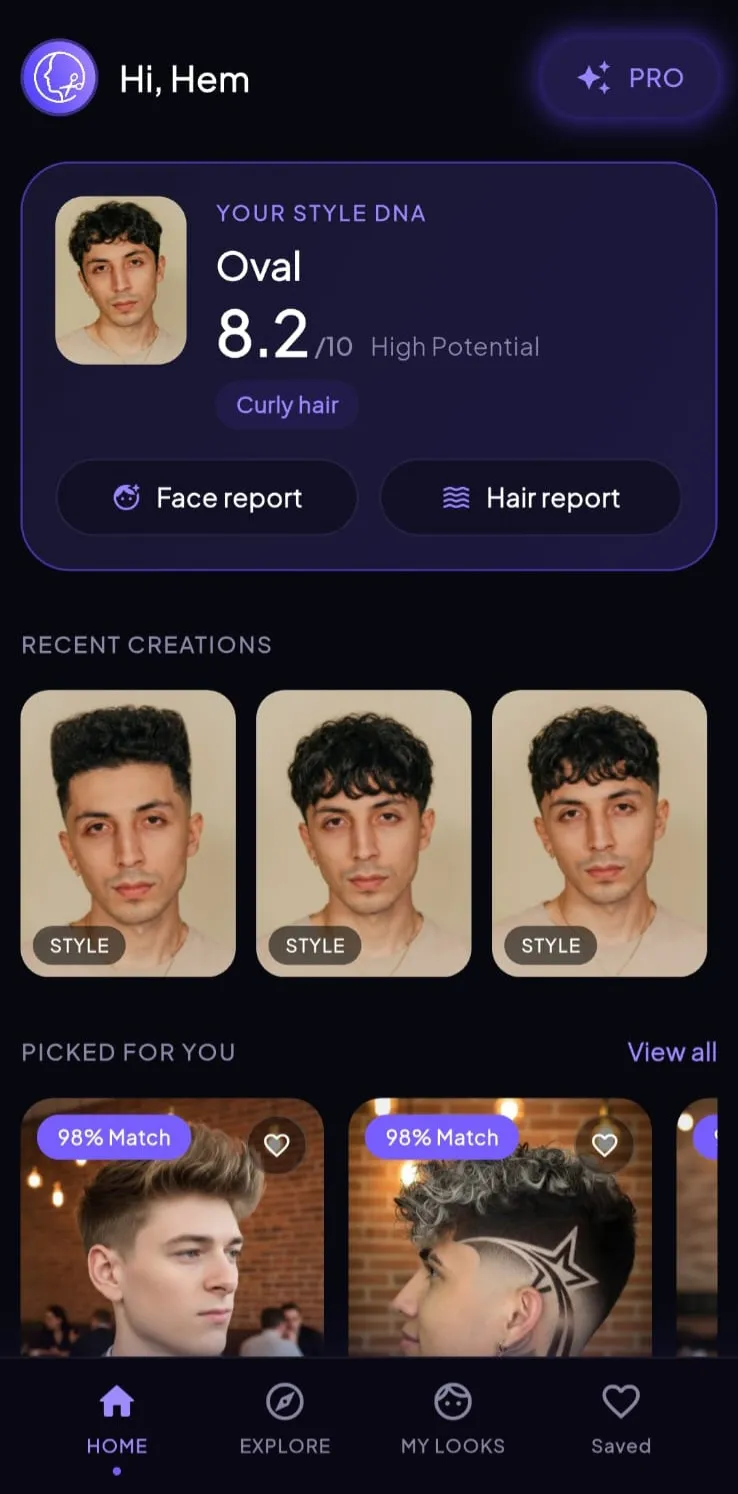
Dye is harder to undo than a haircut, and it’s difficult to judge a shade from a box. Hairover lets you upload a clear photo and try hair colors as well as cuts in Style Studio. You can compare a softer brown with your natural shade while looking at your own hairline.
FAQ
What hair color makes a receding hairline less noticeable?
A shade close to your natural color, or slightly softer, with low contrast against your scalp. Very dark dye on a light scalp tends to make the hairline stand out.
Does dyeing your hair make it recede faster?
The risk to know about is an allergic reaction. The FDA notes that some coal-tar dyes can cause allergic reactions that may result in skin irritation and hair loss, which is why a patch test matters every time.
Should I cover my gray if my hairline is receding?
Not necessarily. Gray hair often has lower contrast against a lighter scalp, so covering it with a dark shade can make the hairline more obvious. Blending often looks better.
Do highlights help hide a receding hairline?
Subtle highlights through the top can make hair look thicker, but keep them away from the hairline itself. Bright strips at the front draw attention to it.