
bob · women
A-Line Bob vs. Inverted Bob: What'sthe Difference?
A-line bob vs. inverted bob explained, including how the back of each is cut, who suits each shape, styling time, and how to ask your stylist for the right one.
Hairover Team
Both cuts are longer in front and shorter in back. The A-line bob keeps a mostly clean, straight slope without stacked layers. An inverted bob adds graduation at the back, creating volume and a rounded shape at the crown. The A-line looks sleek and simple, and the inverted bob looks fuller and more structured.
Side by side
| A-line bob | Inverted bob | |
|---|---|---|
| Back | Short, smooth, little layering | Short, graduated |
| Angle | Clean slope to the front | Slope, with volume at the crown |
| Volume | Low to medium | Medium to high |
| Styling | Straight, smooth, quick | More shaping needed |
| Best hair | Straight, medium to thick | Fine to medium, straight or wavy |
| Trims | About every 6 to 8 weeks | About every 5 to 7 weeks |
Why choose an A-line bob
The clean line is the whole point. On straight hair, it looks sharp and modern, and it does not need much effort. It draws attention down toward the front pieces, which can add length to round faces. Our bob haircut ideas include softer versions.
Why choose an inverted bob
Graduation creates lift at the back, which makes it a helpful choice for fine, flat hair. It also adds shape to the back of the head. The trade-off is upkeep, because a stacked back loses its shape quickly as hair grows, and can need trims more often. Very thick hair may also feel bulky here unless it has been thinned internally.
By face shape
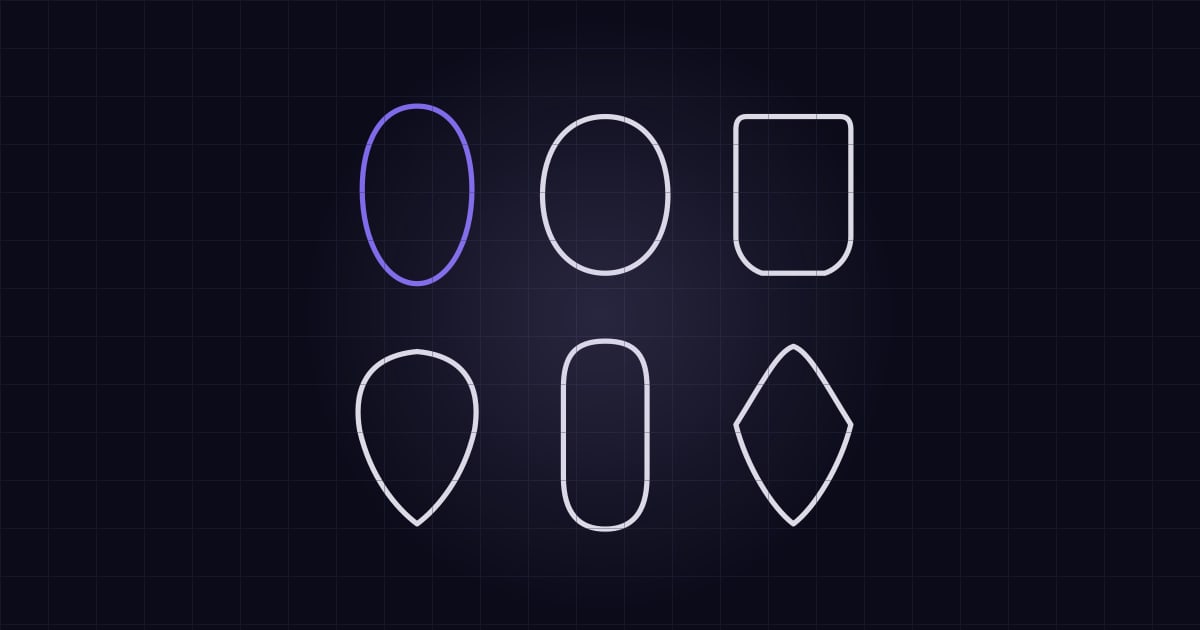
- Round: either, with a longer front that falls below the chin.
- Square: a softer A-line can help, since a sharp line at the jaw adds emphasis.
- Heart: an A-line with a slightly longer front adds balance at the chin.
- Oblong: an inverted bob with a shorter front adds width.
- Diamond: both work, and tucked-behind-the-ear versions show off the cheekbones.
How to ask
A-line: “A bob shorter at the nape, sloping down to just below my chin in front, without any stacked layers. I want a smooth line.”
Inverted: “An inverted bob, with graduated layers at the back for volume at the crown, and longer pieces at the front to just below the chin.”
Show the stylist a photo of the back, since that is the main difference here. It’s also worth checking what the cut will do at your nape if you have a strong hair growth pattern there.
Related guides
Compare them on your own photo
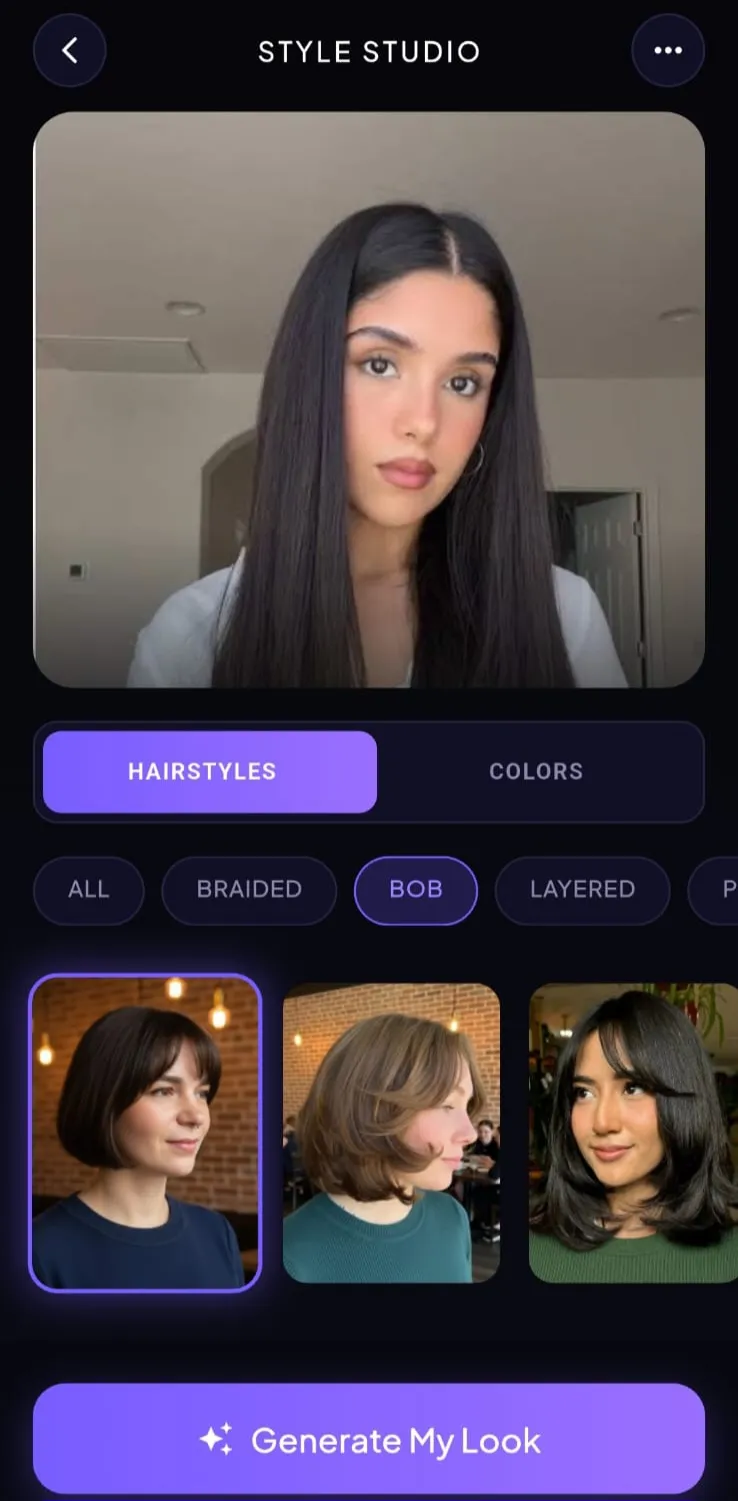
The front pieces land in slightly different places on every face. Hairover lets you upload a clear photo, get a hair analysis, and try hairstyles on your own face in Style Studio.
FAQ
Is an inverted bob the same as a stacked bob?
They are closely related and the terms often overlap. A stacked bob has clearly visible graduated layers at the back, and an inverted bob is mainly defined by its angle.
Which is better for fine hair?
Often an inverted or stacked bob, as graduation builds volume at the crown. A very long A-line can look flat on fine hair unless it has a clean, blunt edge.
Do these cuts work on curly hair?
They work best on straight or gently wavy hair, since the angle needs to show. Curls hide the line, and they can make stacked layers look bulky at the back.